Dispossesions in the Americas

Dispossesions in the Americas

  • Home
  • Explore
  • About
  • Authors
  • Art
  • Bodies
  • Curricula
  • Cultural Heritage
  • Maps
  • Territories
Back to Explore
Narrative 1850 - 2024

The Carriqueo Lof and its Struggle for Land and Water

  • Carriqueo, Susana

  • Bleger, Mariel

  • Yanello, Florencia

  • Cardin, Lorena

  • Tomas, Marcela

  • Ramos, Ana

  • Stella, Valentina

  • Grupo de Estudios sobre Memorias Alterizadas y Subordinadas (GEMAS)

Published: 2024

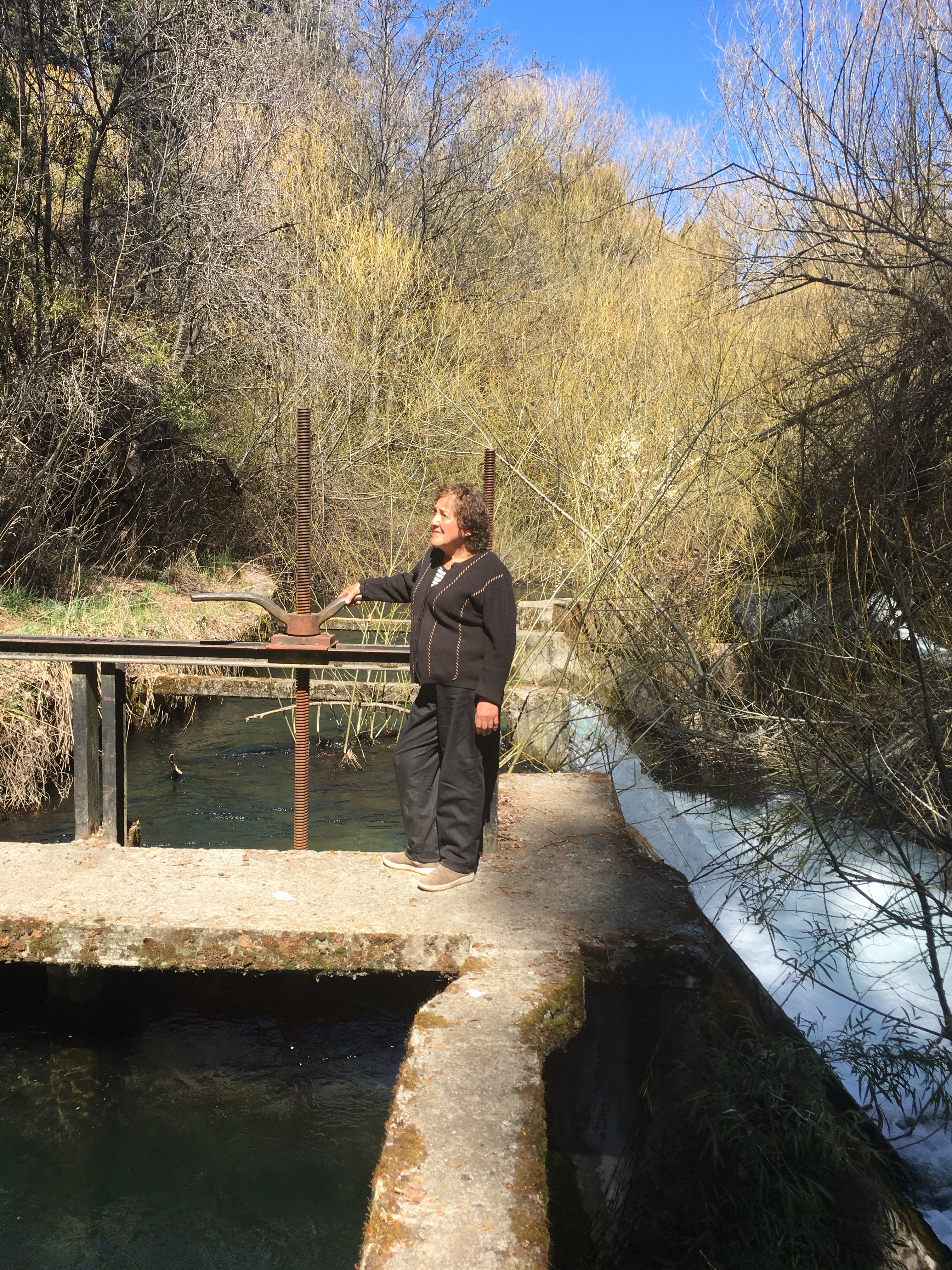
Susana Carriqueo in the GutiƩrrez creek dam

Susana Carriqueo in the GutiƩrrez creek dam

Abstract

The history of the Carriqueo Lof

The Mapuche Carriqueo community is located 11 kilometers from the tourist city of San Carlos de Bariloche, in the Argentine Patagonia. Rudecindo Rozas and Adelaida Vazquez —paternal grandparents of Susana Carriqueo, who lives with her family in the territory—, arrived from Chile around 1900. The family’s history can be traced back to those days until the present. They have always kept a close bond with the water courses that surround the territory and that shaped and conditioned their traditions and learning during their childhood. However, they also acknowledge the changes that their daily livelihoods have undergone because of tourism ventures, river pollution, and growing unplanned development.
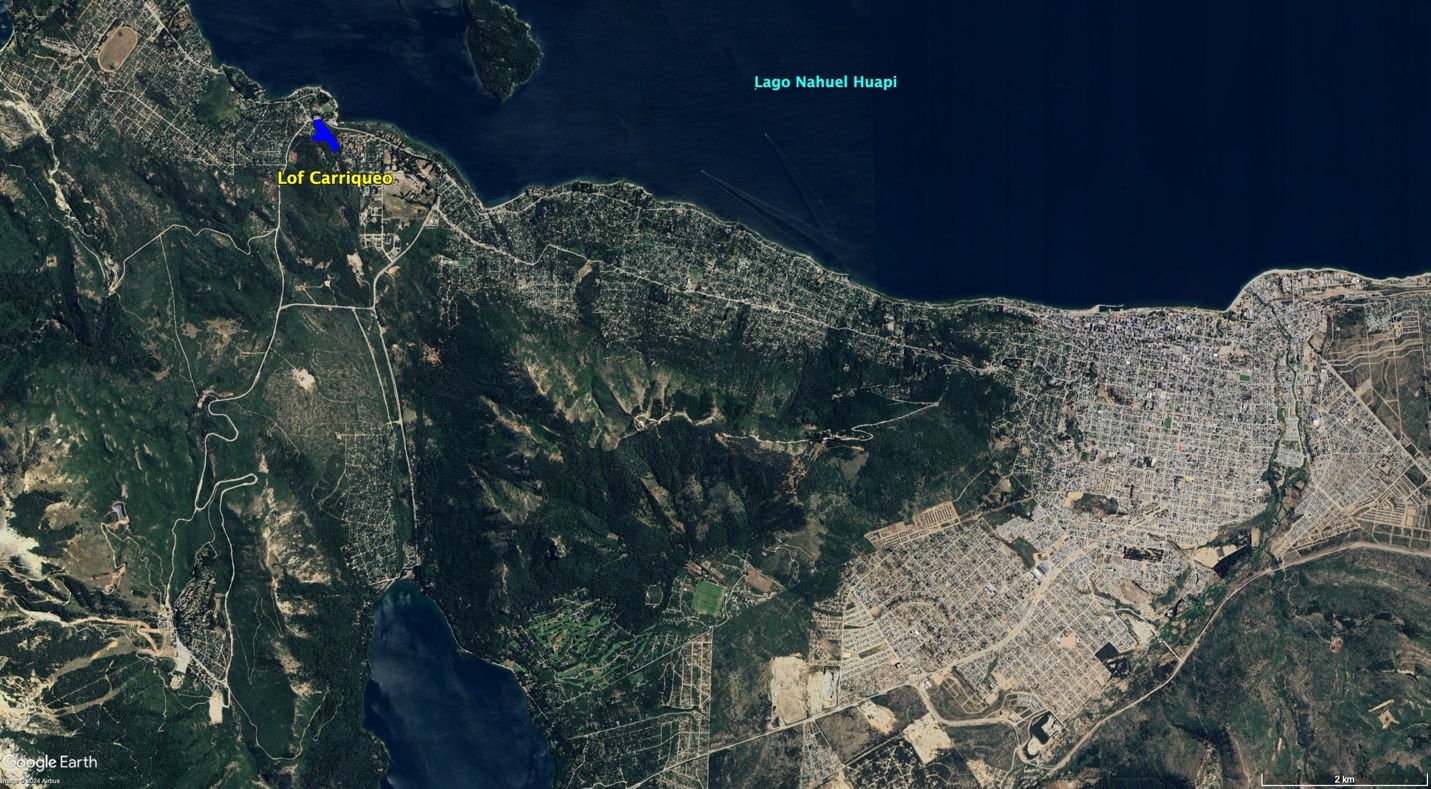
2. Photo. The Carriqueo Lof Area

3- Video. On the Banks of the GutiƩrrez Creek

The city of San Carlos de Bariloche is one of ArgentinaĀ“s tourist hotspots. It is internationally known for having the largest ski center in Latin America and for the natural beauty that surrounds it. In the last thirty years, tourism development and the number of people choosing to move and settle in this Patagonian city have increased in equal measure. This has resulted in infrastructure changes and high levels of pollution and contamination of the areaĀ“s flora, fauna, and environment at large. In addition to this, the historical tensions between private businesses, the Argentine Army and the Indigenous communities have become more relevant in recent years, leaving the claims of the families in a situation of vulnerability and exposure, as in the case of the Carriqueo family, who have been living for more than three generations in the territories that the Argentine State has not yet recognized as their own. The territory of the Lof, which covers two and a half hectares, does not have any official recognition to date, although the community formally requested that a territorial survey be conducted under the umbrella of Federal Act No. 26.160. The need for this act to be enforced arises from the pressure they have been suffering for years at the hands of various actors who have occupied part of their territory and who use this area as a waste dump. The territory currently known as Patagonia was the scene of a genocide carried out by the Argentine and Chilean states in their formative stages. In the last decades of the 19th century, the Argentine army persecuted, murdered, kidnapped, imprisoned, and tortured thousands of Indigenous people who lived freely in their territories. The surviving families and communities belonging to the Mapuche people were displaced from their homeland, taken to concentration camps, or deported as cheap labor to various cities. This process occurred on both sides of the Andes Mountains. In the memory of these families, the decision to move from their places of origin to other areas —as is the case of the members of the Carriqueo community—, responds to survival and collective strategies following the genocide. Over the years, another survival mechanism was the silencing and neglecting of ancestral or idiomatic customs or practices. However, much of the knowledge was transmitted from generation to generation.

In 1938, Rudecindo was hired by the Federal Road Management and Transportation Administration to build dams and dikes from Puerto Moreno Sur to Virgen de las Nieves areas. These constructions are still in use and organize the water course in that part of the city.

4- Video. Looking Back at the Dam“s Management

The couple bore children who eventually moved to nearby places. Their son José Alberto stayed there and married Ángela Carriqueo, who had escaped from a ranch in the Pichi Leufu area, her family“s native territory. The name of the Carriqueo community bears her surname in honor of this woman who was the one who cared for and respected the territory where her children had been born. As for the stories passed on from generation to generation, the Carriqueo family always described how life would take place around the streams, but also depicted with much pain the time when everything started to change as a consequence of the pollution of waters and the undue urban development that took place around them. At present, the third, fourth and fifth generations in the family inhabit the land. Amid the growing urban development, they embrace a partially rural life.

Memories of a Unique Landscape
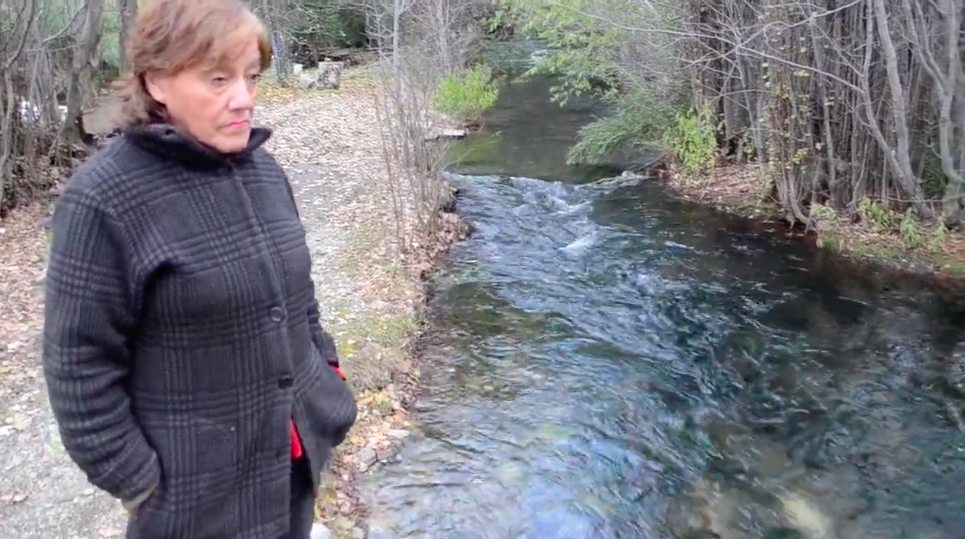
5 - Photo. Susana Carriqueo on the banks of the GutiƩrrez canal

The Community“s territory is surrounded by two water courses: the Gutiérrez creek and a canal bearing the same name, and formed by the diversion of that same stream.
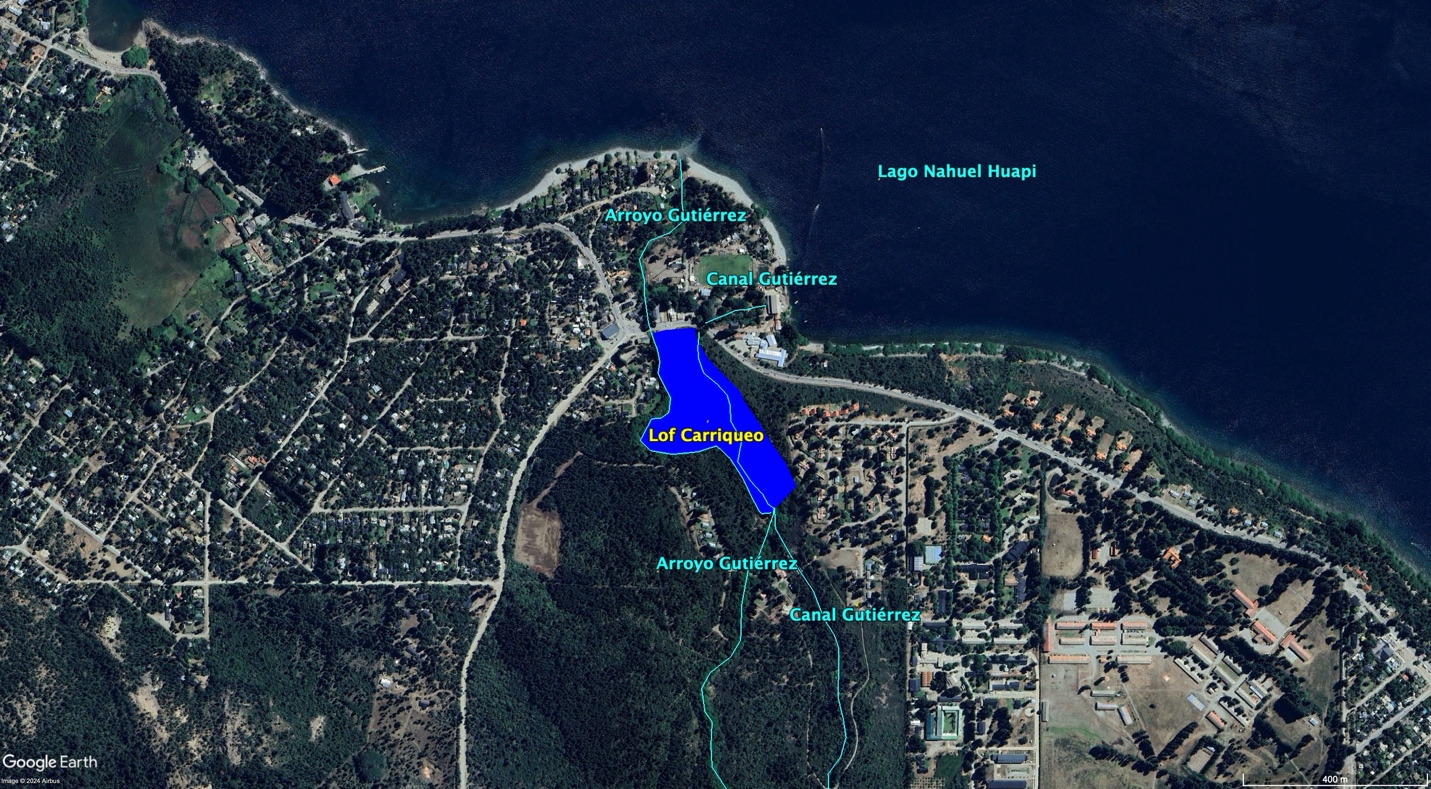
6 - Satellite Image Caption: A community surrounded by water

Upon entering the Lof, one has the feeling of being in the presence of a natural reserve lying in sharp contrast with the progress and urbanization that surrounds the area. The poplars planted by grandmother Adelaida continue to grow on the banks of the river amid the vast extensions of grasslands. During the tours around the place, its members recall the uses and forms that the landscape where they live today formerly had. They narrate how animals would populate the banks of the creeks. They would describe a continuous presence of huillines —a species of carnivorous mammals belonging to the Mustelidae family that inhabits aquatic environments in Chile and Argentina—, along with endemic Patagonian otters that are in danger of extinction. The community also recalls how the wickerwork around the stream would be devoted to making basketry objects, while the reeds would be used to create curtains. It was customary to take long baths in the water. The colors of the sorbus leaves —or rowan of the hunters, tree of the rosaceae family genus— that grew along the stream formed an autumn frame of sheer beauty, so much so that painters of the caliber of JosĆ© Evaristo Repossini would request permission to portray this landscape.
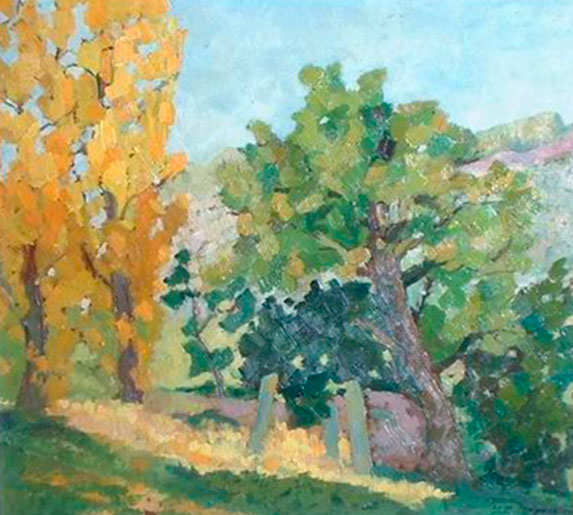
7 - Image ā€œOtoƱoā€ [Autumn], Evaristo Repossini, oil on canvas, 1959. Source: galeriapremier.com.ar.
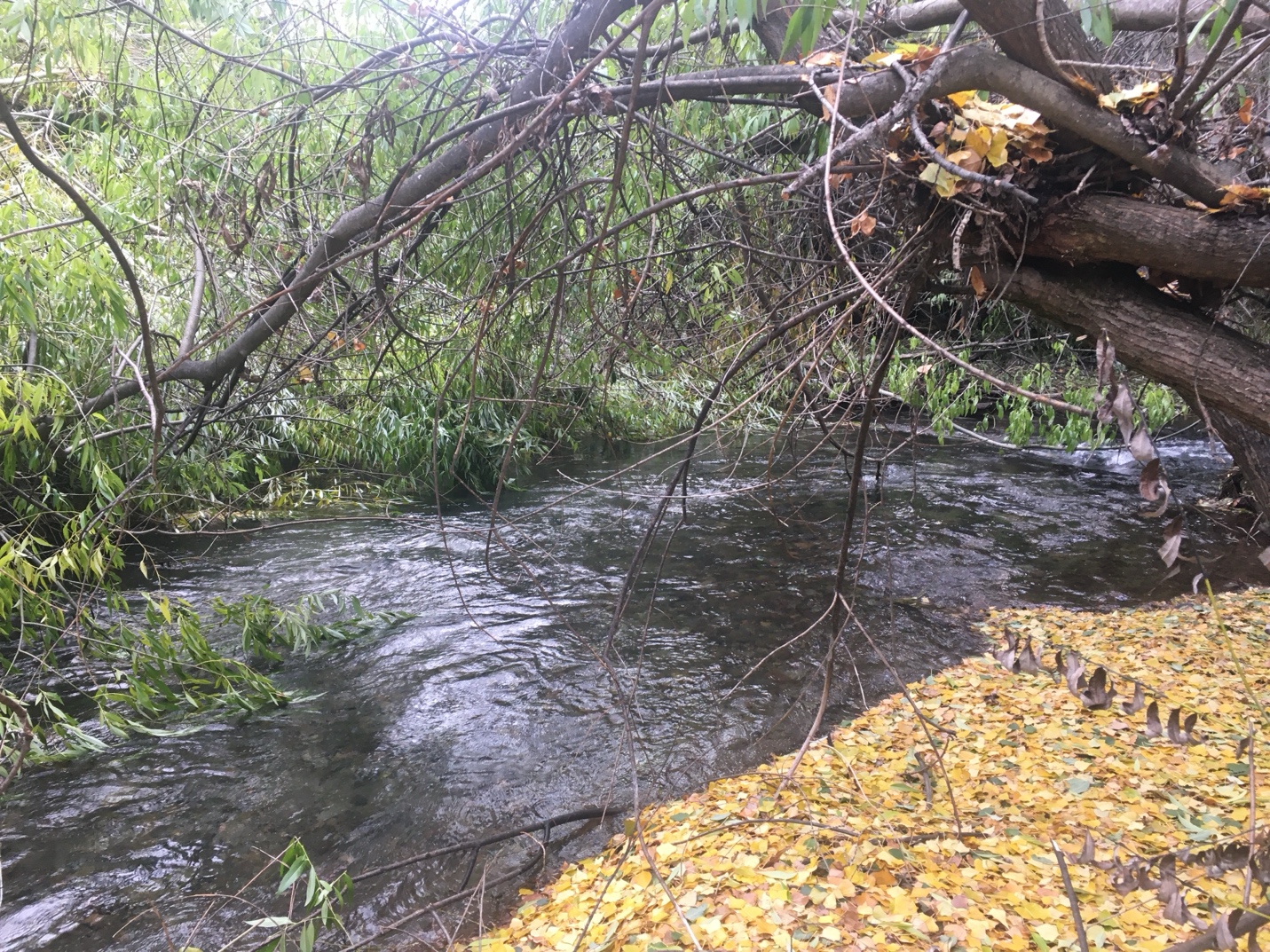
8 - Photo The Lof in Autumn

ā€œHeartfelt Words of Careā€ Inherited

Through the generations, the Mapuche people passed on advice, regulations, and protocols on how to protect the diversity of lives that inhabited their territories; but, above all, they transmitted ā€œheartfelt words of careā€ on the importance of honoring, every day, the bond of reciprocity and affection that had always existed among beings living together in the same abode. Their ancestors had left these nurturing words as a treasure in the Carriqueo community. This is why today they embrace this commitment as their own, draft their own rules and regulations for the preservation and protection of nature, and commit to comply with them. For example, the Carriqueo family believes it is particularly important to keep the stream clean. For this reason, the childrenĀ“s diapers should never be washed in the water, the fish should be cleaned far from the stream, and certain rules should be observed for bathing in the water. Everyone remembers how Ɓngela Carriqueo would take care of the water and the territory, and how she would instruct her sons and daughters to do so through stories, mirroring behavior, and giving advice. ā€œThe water would always be impeccable,ā€ Susana recalls.

9 - Video. Susana Carriqueo“s nostalgia over the canal“s former water purity

A Word of Advice and Knowledge on the River

In the memory of community members, stories and anecdotes about fishing come up with different highlights. There are those in which JosƩ Alberto would organize for his sons and daughters to go fishing with him, taking some kind of harpoons and small boats that he had built to this end.

10 - Video. Subsistence activities and work

They would catch large trout that they would then use for their own consumption, but most of the time they would sell them to neighbors and hotels in the area. Fishing was so abundant that they would fill large 200-liter barrels with the fish. They would also recall that when they were children, they would wake up at four in the morning and go with lanterns or candles to the banks of the stream to fish before going to school.

11 - Video. Traces of family fishing

In turn, people in the area would ask for permission to come down to the shore and spend the day fishing. On occasion, they would give them the day“s catch as a gift. The Carriqueo family even created a lagoon from the canal to raise and breed fry (newly hatched fish).

Life in the Territory

They had at least three orchards in the territory, all of which were supported by an irrigation system built by Susana“s father, running from the creek to the plantations. The family consumed the vegetables, although they would also be sold to nearby neighbors or at the fairs. The women of the community recall that when they were children, they would go from the stream to the orchard with buckets full of water so that the vegetables would not go to waste. They also remember that they used to move firewood from one end of the area by throwing the logs upstream and catching them at the stockpiling place, where they would be secured with hooks to retrieve them from the water. Upon walking through the territory, you may still find traces of the activities carried out over three generations: the stand or scrubbing surface built to wash clothes on the banks of the creek, the spots on the riverbanks where they would go to fish, the bends in the riverbed where they would bathe, and the water irrigation outlet that would take water to the vegetable gardens.

Pollution and the Disruption of Daily Life

12 - Video. Pollution of the Gutierrez Creek

About 30 years ago, the community started to notice health problems in children and neighbors living nearby. They would recall babies suffering from skin problems, gastroenteritis, and diarrhea. Susana can clearly recall how a neighbor had started with stomach problems and become seriously ill because of drinking the water. As soon as they realized these events were linked to water contamination, they initiated an investigation process. A neighbor then told them that the water had been contaminated because the ski resort was discharging sewage into the GutiĆ©rrez stream. The communityĀ“s and neighborsĀ“ concern was such that they pressed to have the water analyzed. The study finally confirmed that the water was ā€œnot fit for human consumption.ā€ As a result, the livelihoods of the Carriqueo community were strongly disrupted. They would now have to travel to a spring to get drinking water and they would no longer bathe in the water because it would affect their skin. According to Susana, the water was no longer clear or crystalline and the stones in the waterbed were covered by a brownish substance. The surface would show bubbles indicating the presence of bacteria. The fish would also evince the effects of contamination: when opened, worms and spots would be visible. In 2007, Erasmo Maldonado, SusanaĀ“s husband, filed a media complaint describing the state of the stream following the winter tourist season.

In 2016, the community requested a new analysis of the water quality of the GutiĆ©rrez stream. The reports of all the analyses historically conducted were unanimous: the water quality ā€œis not suitable for human consumptionā€ (see Complaints and Reports on Water Quality).

Territorial Dispossession

In addition to the water contamination scenario, the people must face the advances of private companies that invade the Community“s territory by means of wire fences and real estate agreements of dubious origin, and the constant pressure exerted by the Argentine Army on their territory.
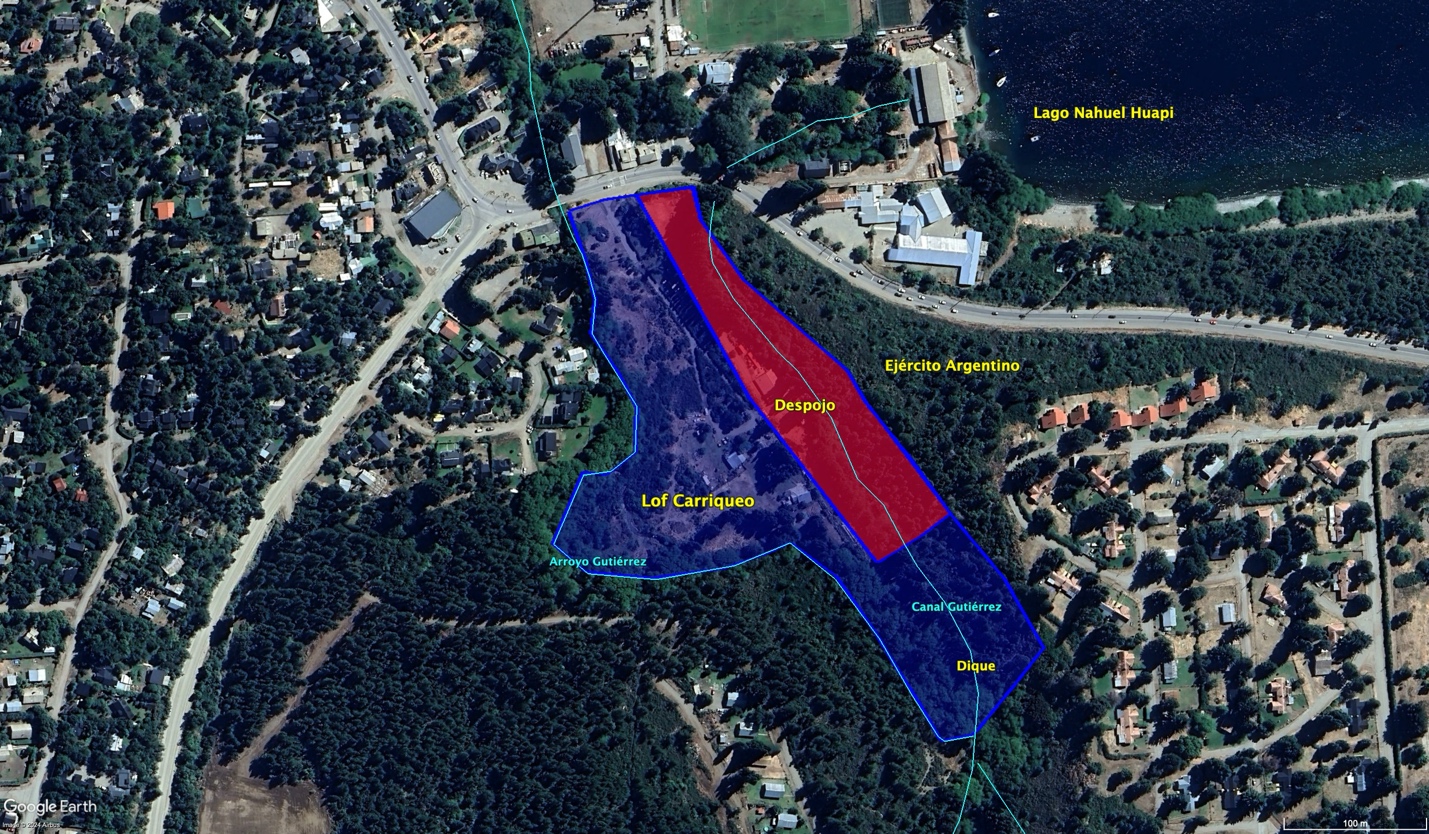
13 - Satellite Image. Territorial dispossession

Private companies have placed ā€œno trespassingā€ signs along the canal where the family used to live, scattered scrap metal, and put up wire fences.
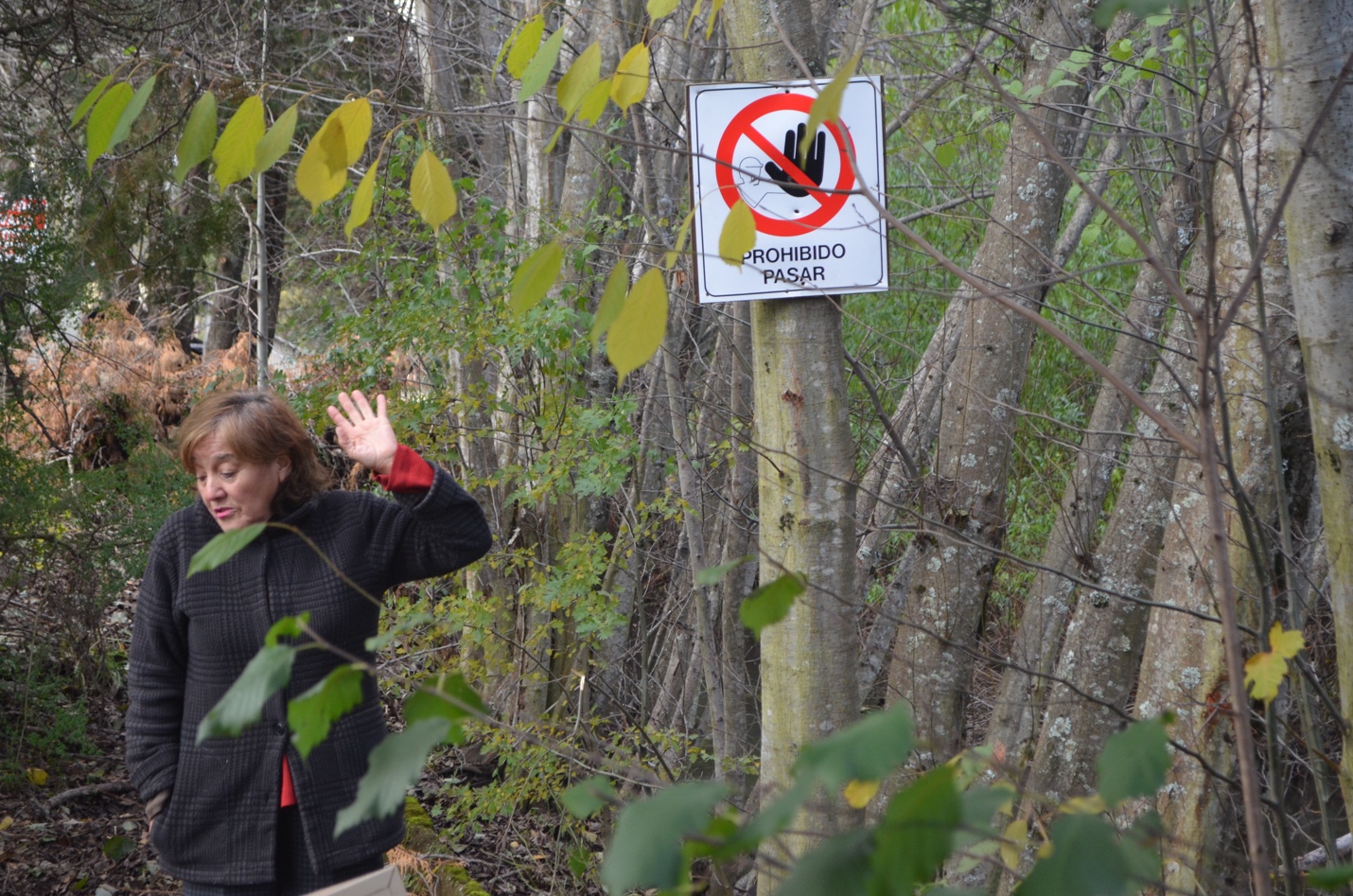
14 - Photo. Signs forbidding access into Carriqueo Lof, reminding everyone of the dispossession
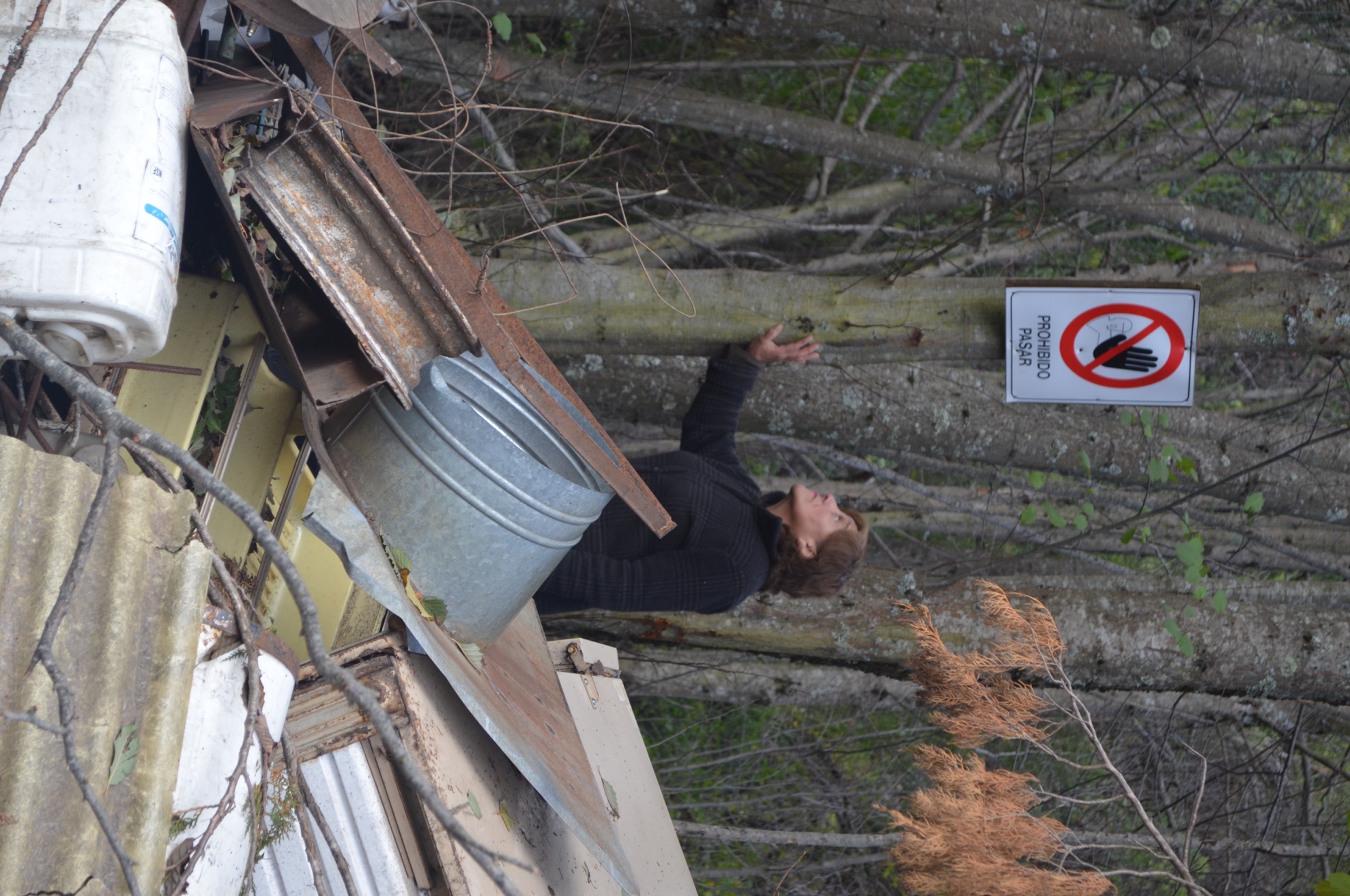
15 - Photo. Caption: Scrap that the usurpers of the Carriqueo Lof are stockpiling
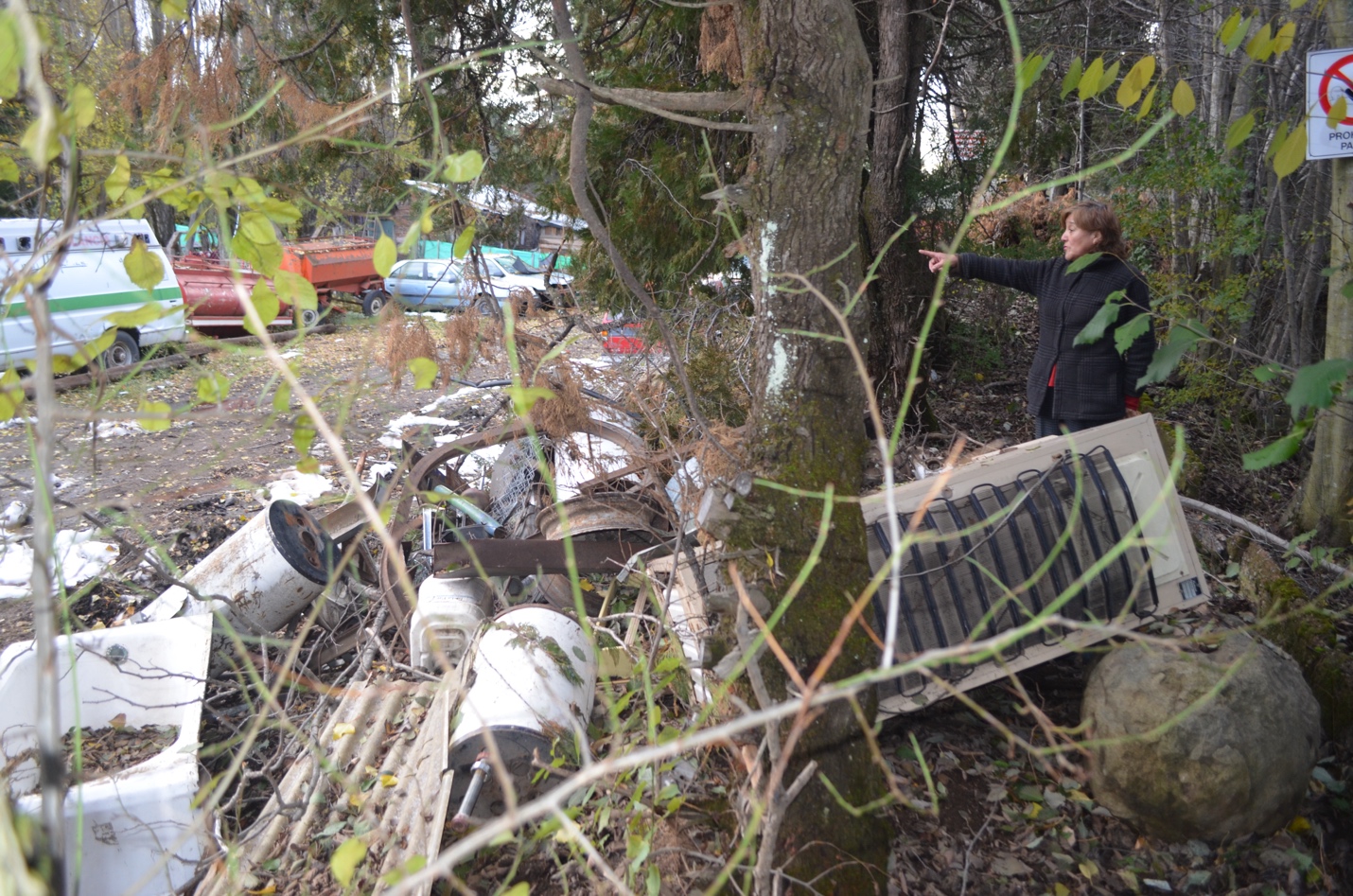
16 - Photo. Caption: Lof Carriqueo turned into a garbage dump by the usurpers

17 - Video. Evidence of the destruction perpetrated by the usurpers

Final reflections: a Community in Defense of its Territory

The history of the Carriqueo Lof tells the story of a Mapuche family living in a territory of unique natural beauty. Generation after generation, they have learned to care for and enjoy their environment, and have passed this knowledge on to the succeeding generations. Their memory is full of anecdotes about the waters that surround them: games, subsistence, work, landscape, care, and tragic accidents. The canal and the GutiĆ©rrez stream embrace the territory as if containing it, taking care of it. However, this embrace has not been enough to protect the territory from outsiders. ArgentinaĀ“s history of persecution of Indigenous peoples and dispossession of their territories include the Mapuche Carriqueo community. Both the Argentine Army and various private parties have pressured the Lof to take over their territory through swindles, demands and hostility. Despite the familyĀ“s unwavering efforts to obtain official recognition of their place in the world, they have not yet succeeded in doing so. On the contrary, they systematically continue to receive eviction orders and the prohibition —through signs and through the presence of usurpers—, to access the sector within their territory where the GutiĆ©rrez canal built by Susana CarriqueoĀ“s grandfather is located. The water courses surrounding the community have also been insufficient to prevent the advancement and consequences of the gentrification process. The beauty of San Carlos de Bariloche city and its surroundings has attracted capital for the development of the tourist industry: ski resorts, hotels, restaurants, and a significant inflow of tourists. This development has not been framed within regulations seeking to avoid and halt the harmful effects on the population and the environment. Thus, the Carriqueo family —with much regret and longing—, is a privileged witness not only to the dispossession, but also to the degradation of their environment. The waters are polluted, the fauna moves away or becomes extinct, the vegetation disappears, the people get sick, the territory is transformed into a place where waste piles up. Despite everything, the love for their land and the strength to respect their eldersĀ“ teachings are unwavering. With firm determination, the Carriqueo Lof does not cease to submit their complaints to the authorities and to take care of their territory.

Citation

Carriqueo, Susana, Mariel Bleger, Florencia Yanello, Lorena Cardin, Marcela Tomas, Ana Ramos, Valentina Stella, and Grupo de Estudios sobre Memorias Alterizadas y Subordinadas (GEMAS). 2024. 'The Carriqueo Lof and its Struggle for Land and Water'. Dispossessions in the Americas. https://staging.dia.upenn.edu/en/content/CarriqueoS001/
Reading in Spanish

Narrative 1850 - 2024

La Lof Carriqueo y su lucha en torno al territorio y al agua

  • Carriqueo, Susana

  • Bleger, Mariel

  • Yanello, Florencia

  • Cardin, Lorena

  • Tomas, Marcela

  • Ramos, Ana

  • Stella, Valentina

  • Grupo de Estudios sobre Memorias Alterizadas y Subordinadas (GEMAS)

Published: 2024

Susana Carriqueo en el dique del arroyo GutiƩrrez

Susana Carriqueo en el dique del arroyo GutiƩrrez

Reading in Portuguese

Narrative 1850 - 2024

A Lof Carriqueo e sua luta na defesa do território e da Ôgua

  • Carriqueo, Susana

  • Bleger, Mariel

  • Yanello, Florencia

  • Cardin, Lorena

  • Tomas, Marcela

  • Ramos, Ana

  • Stella, Valentina

  • Grupo de Estudios sobre Memorias Alterizadas y Subordinadas (GEMAS)

Published: 2024

Susana Carriqueo no dique do arroio GutiƩrrez

Susana Carriqueo no dique do arroio GutiƩrrez

Resumo

A história da Lof Carriqueo

A comunidade mapuche Carriqueo estÔ localizada a onze quilÓmetros da turística cidade de San Carlos de Bariloche, na PatagÓnia argentina. Rudecindo Rozas e Adelaida VÔzquez, avós paternos de Susana Carriqueo, quem mora com sua família no território, chegaram do Chile aproximadamente no ano 1900. As histórias da família começaram nessa época e se estendem até a atualidade, e são o testemunho da vida ligada permanentemente aos cursos de Ôgua que rodeiam o território e que determinaram as tradições e os aprendizados durante a infância. Mas também apontam para as mudanças que a vida cotidiana foi experimentando a partir dos empreendimentos turísticos, da contaminação do rio e da urbanização crescente não planejada.

2 – Imagem de satĆ©lite. Zona da Lof Carriqueo

2 – Imagem de satĆ©lite. Zona da Lof Carriqueo

3 VĆ­deo. ƀ beira do arroio GutiĆ©rrez

A cidade de San Carlos de Bariloche Ć© um dos pontos nevrĆ”lgicos do paĆ­s em relação ao turismo. Ɖ conhecida internacionalmente por ter o maior centro de esqui da AmĆ©rica Latina e pela beleza natural do lugar. Nos Ćŗltimos trinta anos tĆŖm aumentado em igual medida o desenvolvimento turĆ­stico e o nĆŗmero de pessoas que decidiram morar nessa cidade patagĆ“nica. Isso gerou mudanƧas na infraestrutura e altos nĆ­veis de poluição e dano Ć  flora, fauna e ao meio ambiente do lugar. AlĆ©m disso, as históricas tensƵes entre grupos privados, o ExĆ©rcito argentino e as comunidades indĆ­genas tĆŖm adquirido maior relevĆ¢ncia nos Ćŗltimos anos, deixando em situação de vulnerabilidade e exposição as reclamaƧƵes das famĆ­lias - como a famĆ­lia Carriqueo - que hĆ” mais de trĆŖs geraƧƵes mora em territórios que o Estado argentino ainda nĆ£o reconheceu que lhes pertencem. O território da Lof, que abrange dois hectares e meio, nĆ£o possui, atĆ© este momento, nenhum reconhecimento oficial, embora a comunidade tenha solicitado, formalmente, que se realizasse o levantamento territorial no Ć¢mbito da lei nacional n.° 26.160. A necessidade de que essa lei seja implementada tem origem na pressĆ£o que hĆ” anos vĆŖm padecendo por diversos atores que ocuparam parte de seu território e que utilizam tal superfĆ­cie como lixĆ£o. O território que Ć© conhecido atualmente como PatagĆ“nia foi cenĆ”rio de um genocĆ­dio efetuado pelos estados-nação argentino e chileno, quando estavam constituindo-se como tais. Nas Ćŗltimas dĆ©cadas do sĆ©culo XIX, o ExĆ©rcito argentino perseguiu, assassinou, sequestrou, encerrou e torturou milhares de indĆ­genas que habitavam livremente nos seus territórios. As famĆ­lias e comunidades do povo mapuche que sobreviveram foram retirados de seus lugares de origem, foram conduzidas a campos de concentração ou deportadas como mĆ£o de obra barata para diversas cidades. Este processo ocorreu nos dois lados da Cordilheira dos Andes. Nas memórias destas famĆ­lias, a decisĆ£o de deslocar-se de seus lugares de origem para outros (como no caso dos membros da comunidade Carriqueo) responde a modos de supervivĆŖncia e estratĆ©gias coletivas posteriores ao genocĆ­dio. Ao longo dos anos, outra das ferramentas de supervivĆŖncia foi silenciar e esquecer seus costumes ou prĆ”ticas ancestrais ou linguĆ­sticas. Mesmo assim, muitos dos conhecimentos foram sendo transmitidos de uma geração para a outra.

Em 1938 Rudecindo foi contratado por Vialidad Nacional para a construção de represas e diques desde Puerto Moreno Sur até Virgen de las Nieves. Essas construções ainda estão em uso e organizam o curso de Ôgua nessa parte da cidade.

4 Vƭdeo. Legenda: LembranƧas do cuidado do dique

O casal teve filhos e filhas que, com o tempo, foram instalando-se nas vizinhanças. No lugar permaneceu seu filho José Alberto, que casou com a Ángela Carriqueo, que vinha escapando de uma fazenda na zona de Pichi Leufu, local de origem de sua família. O nome da comunidade Carriqueo é o sobrenome desta mulher que, com dedicação, cuidou e respeitou o território, segundo seus filhos e filhas. Nos relatos herdados, a família Carriqueo conta frequentemente como era a vida nas proximidades dos arroios, e descreve com muita dor os momentos em que a vida cotidiana começou a mudar como consequência da contaminação das Ôguas e da urbanização desmedida que teve lugar nos arredores. Atualmente, a terceira, quarta e quinta gerações da família habitam no território. No contexto de urbanização crescente, os habitantes mantêm uma vida parcialmente rural.

Lembranças de uma paisagem única

5 - Foto. Susana Carriqueo Ơ beira do canal GutiƩrrez

5 - Foto. Susana Carriqueo Ơ beira do canal GutiƩrrez

O território da comunidade se encontra rodeado por dois cursos de Ôgua: o arroio Gutiérrez e um canal homÓnimo formado por um desvio do arroio.

6 – Imagem de satĆ©lite. Uma comunidade entre as Ć”guas

6 – Imagem de satĆ©lite. Uma comunidade entre as Ć”guas

Ao entrar na Lof, tem-se a sensação de estar na presença de uma Ôrea protegida, que contrasta com os avanços da urbanização dos arredores. Os Ôlamos plantados pela avó Adelaida continuam crescendo no litoral do rio e as grandes extensões de pasto permanecem intatas. Ao percorrer o lugar, os integrantes da comunidade rememoram os usos e formas que a paisagem tinha no local onde eles moram hoje. Contam que os animais ficavam à beira dos arroios. Encontravam-se sempre lontras (espécie de mamífero carnívoro da família Mustelidae que habita ambientes aquÔticos no Chile e na Argentina) e de nútrias endêmicas da PatagÓnia que estão em perigo de extinção. Segundo lembram os integrantes da comunidade, o vime que se encontrava nas proximidades do arroio era utilizado para realizar objetos de cestaria e com os juncos faziam-se cortinas. Era habitual tomar prolongados banhos na Ôgua. As cores das folhas das sorveiras (ou serbal de los cazadores, uma Ôrvore do gênero da família das rosÔceas) cresciam no litoral do arroio e constituíam um cenÔrio outonal de grande beleza, tanto que pintores da dimensão de José Evaristo Repossini solicitaram licença para retratar essa paisagem.

7 – Imagem. ā€œOutonoā€, Evaristo Repossini, óleo, 1959. Fonte: galeriapremier.com.ar.

7 – Imagem. ā€œOutonoā€, Evaristo Repossini, óleo, 1959. Fonte: galeriapremier.com.ar.

8 – Foto. A Lof no outono

8 – Foto. A Lof no outono

ā€œAs boas palavrasā€ herdadas

De geração em geração, as pessoas da comunidade mapuche foram transmitindo conselhos, normativas e protocolos acerca de como resguardar as vidas diversas que estĆ£o presentes nos seus territórios; mas, em particular, transmitiram ā€œboas palavrasā€ sobre a importĆ¢ncia de honrar, cada dia, o vĆ­nculo de reciprocidade e afeto que sempre existiu entre todos os seres que convivem no mesmo espaƧo. Os/as antepassados/as deixaram na comunidade Carriqueo um tesouro: essas boas palavras. E por isso hoje assume esse compromisso construindo suas normas e regras de cuidado da natureza e obrigando-se a cumpri-las. Por exemplo, para a famĆ­lia Carriqueo Ć© muito importante manter o arroio limpo. Para consegui-lo, as fraldas das crianƧas nunca deviam ser lavadas na Ć”gua, Limpavam-se os peixes longe do arroio e existiam certas regras para tomar banho. Todos se lembram como a Ɓngela Carriqueo cuidava da Ć”gua e do território, e como ensinou os filhos e filhas a fazĆŖ-lo, atravĆ©s de histórias, comportamentos e conselhos. ā€œA Ć”gua era impecĆ”velā€ conta a Susana.

9 - Vƭdeo. A saudade de Susana Carriqueo da antiga pureza das Ɣguas do canal

Os conselhos e o conhecimento sobre o rio

Na memória dos integrantes da comunidade, as histórias e anedotas ligadas à pesca aparecem com diferentes ênfases. Por exemplo, aquelas em que o José Alberto se organizava para ir pescar com os filhos e as filhas levando uma espécie de arpões e cestas que ele mesmo elaborava.

10 - VĆ­deo. Atividades de subsistĆŖncia e trabalho

Pescavam trutas grandes que usavam para o consumo familiar, mas com frequência, para vendê-las aos vizinhos e aos hotéis das proximidades. Era tão abundante a pesca que completavam grandes barris de 200 litros de pescado. Contam também que, quando eram crianças, acordavam às quatro da manhã para ir ao rio, com lanternas ou tochas até a beira do arroio, para pescar antes de ir à escola.

11 - VĆ­deo. As marcas da pesca familiar

Naquela Ć©poca, as pessoas que moravam por perto lhes pediam licenƧa para chegar atĆ© a beira do rio e desfrutar de um dia de pesca. ƀs vezes, os visitantes lhes davam como presente o que tivessem pescado. A famĆ­lia Carriqueo chegou a criar uma lagoa a partir do canal para semear alevinos (peixes na fase de transição da larva para o juvenil).

A vida no território

Possuíam, pelo menos, três hortas no território, todas elas alimentadas por um sistema de rega construído pelo pai da Susana, partindo do arroio e chegando até as plantações. Os legumes eram consumidos pela família, mas também eram vendidos aos vizinhos ou nas feiras. As mulheres da comunidade contam que, quando eram crianças, tinham que ir do arroio até a horta com baldes cheios de Ôgua para que os legumes não murchassem. Elas se lembram também que carregavam a lenha desde um extremo do território, lançavam os toros Ôguas acima para recebê-los depois no local de armazenagem, utilizando ganchos para retirÔ-los da Ôgua. Ao percorrer o território ainda é possível encontrar marcas das atividades realizadas por três gerações de habitantes: a base construída para lavar roupa à beira do arroio, os espaços no litoral onde pescavam, as curvas do curso de Ôgua onde tomavam banho, a tomada de Ôgua para a rega das hortas.

A contaminação e a alteração da vida cotidiana

12 - Vídeo. A contaminação do arroio Gutiérrez

HĆ” uns trinta anos, a comunidade comeƧou a registrar problemas de saĆŗde nas crianƧas e nos adultos da vizinhanƧa. Os bebĆŖs tinham problemas na pele, gastrenterite e diarreia. A Susana lembra que uma vizinha teve problemas estomacais e ficou gravemente doente como consequĆŖncia de ter bebido essa Ć”gua. Quando esses acontecimentos foram relacionados com os sinais de contaminação da Ć”gua, foi iniciada uma pesquisa. Uma vizinha contou que as Ć”guas estavam contaminadas porque o complexo de esqui lanƧava Ć”guas servidas ao arroio GutiĆ©rrez. A preocupação da comunidade e dos vizinhos fez com que solicitassem a anĆ”lise da Ć”gua. O estudo indicou que a Ć”gua ā€œnĆ£o era apta para consumo humanoā€. A partir da contaminação da Ć”gua a vida cotidiana da comunidade Carriqueo se alterou de maneira decisiva. Por exemplo, foi necessĆ”rio se deslocar atĆ© uma vertente para conseguir Ć”gua para beber e nĆ£o continuaram tomando banho no arroio porque a Ć”gua provocava doenƧas na pele. Segundo a Susana, a Ć”gua jĆ” nĆ£o Ć© transparente nem cristalina e as pedras do leito do arroio se cobriram de uma substĆ¢ncia de cor marrom. A superfĆ­cie apresenta bolhas que indicam a presenƧa de bactĆ©rias. Os peixes tambĆ©m evidenciam os efeitos da contaminação: ao abri-los encontram-se vermes e manchas. Em 2007, Erasmo Maldonado, esposo da Susana, fez uma denuncia mediĆ”tica descrevendo o estado do arroio quando termina a temporada turĆ­stica invernal.

Em 2016, a comunidade solicitou uma nova anĆ”lise da qualidade das Ć”guas do arroio GutiĆ©rrez. Os relatórios de todas as anĆ”lises realizadas historicamente foram unĆ¢nimes: a Ć”gua ā€œnĆ£o Ć© apta para consumo humanoā€ (ver Denuncias e Informes sobre la calidad del agua).

O despojo territorial

Além da contaminação das Ôguas, iniciativas privadas que invadem o território da comunidade instalam cercas e iniciam projetos imobiliÔrios de procedência incerta, e o Exército argentino aplica pressão constante no território.

13 – Imagem de satĆ©lite. O despojo territorial

13 – Imagem de satĆ©lite. O despojo territorial

O setor privado colocou na beira do canal - onde a famĆ­lia desenvolvia sua vida - cartazes indicando que Ć© proibido passar, deixando montes de sucata e instalando cercas de arame.

14 - Foto. Cartazes de proibição de acesso dentro da Lof Carriqueo, que evidenciam o despojo

14 - Foto. Cartazes de proibição de acesso dentro da Lof Carriqueo, que evidenciam o despojo

15- Foto. Sucata acumulada pelos usurpadores da Lof Carriqueo

15- Foto. Sucata acumulada pelos usurpadores da Lof Carriqueo

16 - Foto. Legenda: A Lof Carriqueo transformada em lixão pelos usurpadores

16 - Foto. Legenda: A Lof Carriqueo transformada em lixão pelos usurpadores

17 - VĆ­deo. EvidĆŖncia do dano efetuado pelos usurpadores

Reflexões finais: uma comunidade na defesa de seu território

A história da Lof Carriqueo é o relato da forma de viver de uma família mapuche, em um território de incomparÔvel beleza natural. Cada geração soube cuidar e desfrutar do ambiente e transmitiu esse saber às seguintes gerações. Sua memória contém inúmeras histórias sobre as Ôguas circundantes: jogos, subsistência, trabalho, paisagem, cuidado e também acidentes trÔgicos. O canal e o arroio Gutiérrez abraçam o território, como forma de contenção e de cuidado. Mas esse abraço não serviu para proteger o território das pessoas que vêm de fora. A história argentina de perseguição dos povos indígenas e de despojo de seus territórios incluiu a comunidade mapuche Carriqueo. O Exército argentino e diversas organizações privadas têm pressionado a Lof para apoderar-se de seu território através de estafas, demandas e hostilidade. A pesar dos incansÔveis esforços da família dirigidos a obter o reconhecimento oficial de seu lugar no mundo, ainda não o conseguiram. Pelo contrÔrio, sistematicamente recebem ordens de despejo e a proibição, mediante a colocação de cartazes e da presença dos usurpadores, de ter acesso ao setor de seu território onde se encontra o canal Gutiérrez, construído pelo avÓ de Susana Carriqueo. Os cursos de Ôgua que rodeiam a comunidade tampouco conseguiram evitar o avanço e as consequências do processo de gentrificação. A beleza da paisagem da cidade de San Carlos de Bariloche e seus arredores tem atraído capitais para o desenvolvimento da indústria do turismo: centros de esqui, hotéis, restaurantes e enorme quantidade de turistas. Esse desenvolvimento não tem sido regulado por normativas dirigidas a evitar e controlar os efeitos nocivos sobre as populações e o meio ambiente. Assim, a família Carriqueo, com muito pesar e saudade, é testemunha privilegiada não apenas do despojo, mas da deterioração do ambiente. As Ôguas estão contaminadas, a fauna se afasta ou se extingue, a vegetação desaparece, as pessoas adoecem, o território tem se transformado em um lugar de acumulação de desperdícios. Apesar disso, o amor por seu território e a força por respeitar os ensinamentos de seus antecessores são inquebrantÔveis. Com tenacidade firme, a Lof Carriqueo não deixa de reclamar às autoridades e de cuidar seu território.

Citation

Carriqueo, Susana, Mariel Bleger, Florencia Yanello, Lorena Cardin, Marcela Tomas, Ana Ramos, Valentina Stella, and Grupo de Estudios sobre Memorias Alterizadas y Subordinadas (GEMAS). 2024. 'A Lof Carriqueo e sua luta na defesa do território e da Ôgua'. Dispossessions in the Americas. https://staging.dia.upenn.edu/pt/content/CarriqueoS001/

Related Content

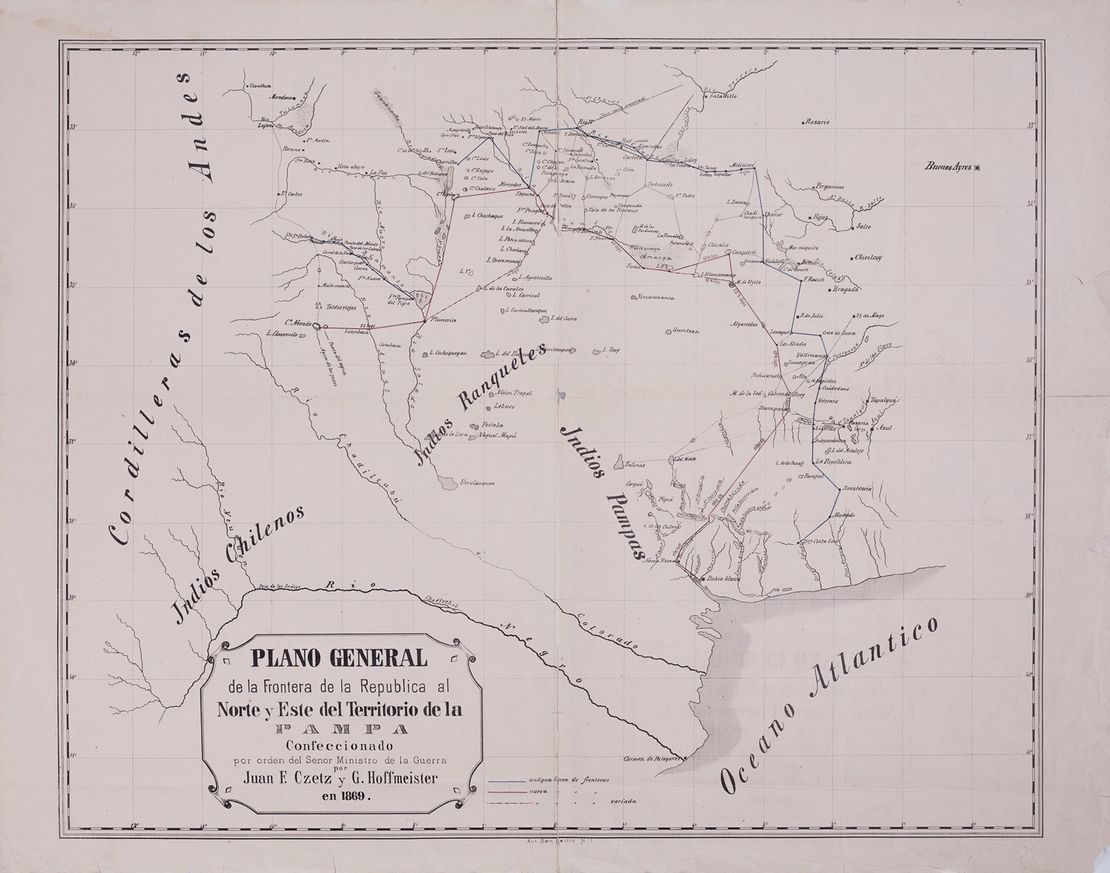
The Frontier of the Argentine Republic to the North and East of the la Pampa Territory in 1869

The Frontier of the Argentine Republic to the North and East of the la Pampa Territory in 1869

Map Commentary 1869
Kowkülen [Liquid being]

Kowkülen [Liquid being]

Artwork

Dispossessions in the Americas

A project by

University of Pennsylvania

Copyright 2024

With support from

Mellon Foundation

Site design & development

Element 84

Art Credits

Susana Carriqueo in the GutiƩrrez creek dam

Site Pages

  • Home
  • Explore
  • About
  • Authors
  • Art
  • Bodies
  • Curricula
  • Cultural Heritage
  • Maps
  • Territories