Abstract
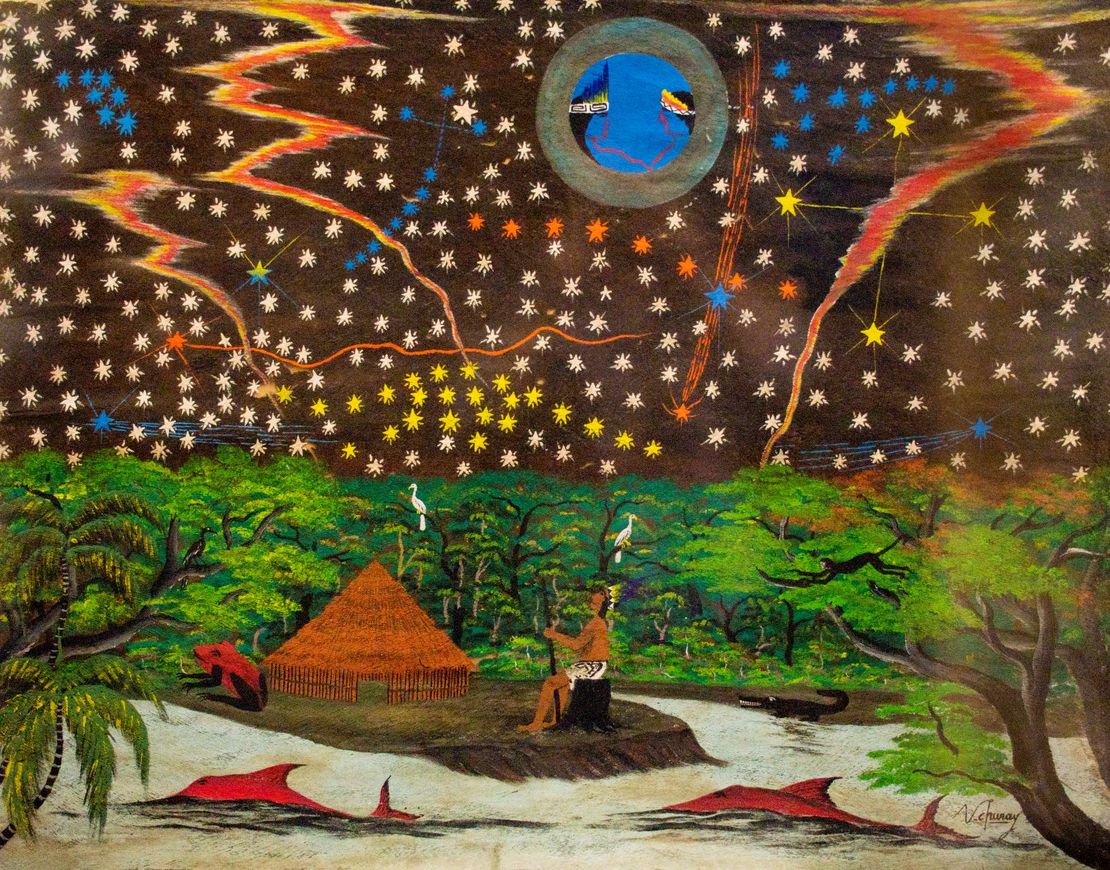
This work is related to cultural heritage because it encapsulates and celebrates the rich artistic tradition of the Indigenous Shipibo-Conibo people in the Ucayali region of Peru. The Kené patterns are an integral part of their cultural heritage and worldview. These intricate geometric representations are not only an artistic expression but also convey deep spiritual connections, ancestral knowledge, and the relationship of these communities with the Amazon rainforest and its biodiversity. Cultural heritage is not limited to historical objects or monuments but also encompasses a human group’s cultural expressions, traditions, and practices. In this case, the Kené works represent a unique way of transmitting and preserving the knowledge and worldview of the Shipibo-Conibo, making them a valuable cultural heritage that deserves to be appreciated and protected.
This series of artworks showcases a fascinating array of Kené patterns, each unique in its design and color palette. Kené art is a traditional artistic expression by Indigenous women of the Shipibo-Conibo ethnicity in the Ucayali region of Peru. These geometric patterns and lines are skillfully applied to various surfaces, including fabrics, ceramics, wood, and, notably, the human body. Each Kené in this series holds deep symbolic meaning, reflecting the worldview of the region’s Indigenous peoples. The designs can represent energy pathways, the Milky Way, the geography of the jungle, fauna, flora, and other elements of Amazonian nature and culture. What makes these patterns even more remarkable is that they are “sung” into existence as Indigenous women create them, tracing the lines with their fingers on Shipibo fabrics. This artistic expression is visual and a way of conveying emotions and profound narratives through tradition and creativity.
Citation
Silvano, Olinda. 2021. 'Serie Patrones [Patterns Series]'. Dispossessions in the Americas. https://staging.dia.upenn.edu/en/art/APER075/