Abstract
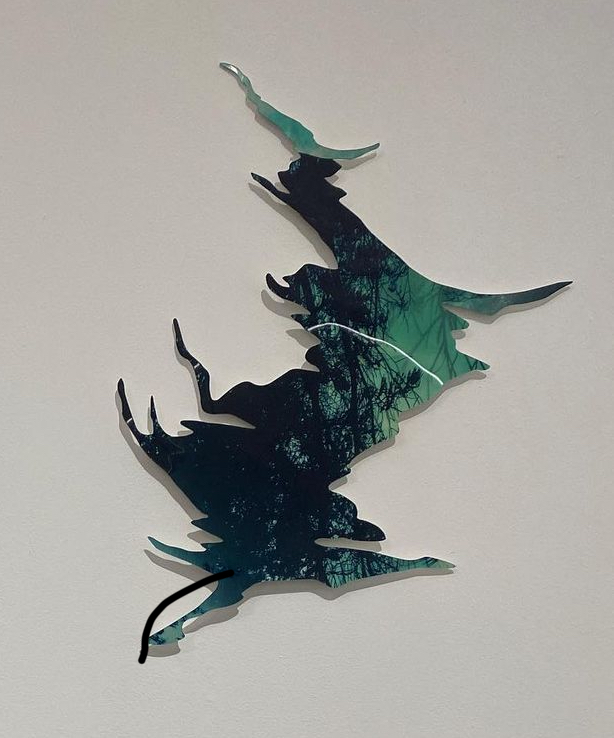
This artwork is related to the territory because it represents the rich and diverse plant life of the Amazonian region. Using lenticular cutouts adds depth and dimension to the plant forms, making them appear almost lifelike and dynamic from different viewing angles. This technique highlights the intricate beauty and complexity of the Amazonian flora. Furthermore, including simple lines and drawings that suggest hands and covered faces introduces a human element to the artwork. This human presence amid the lush plant life can reflect the deep connection between Indigenous cultures and their natural environment in the Amazon. The artwork invites viewers to contemplate the coexistence and interdependence of humans and the region’s rich biodiversity, emphasizing the importance of preserving this unique and vital territory.
The artwork consists of images representing the forms of plants native to the Amazonian region. These images are lenticular cutouts, meaning they have a three-dimensional quality that changes as you view them from different angles. The shapes of the plants are intricately detailed and appear to come to life when viewed from different perspectives. In addition to the plant shapes, the images include simple lines and drawings that suggest the presence of hands and covered faces. These elements add a layer of meaning to the artwork, creating a sense of mystery and connection between nature and humanity. Collectively, the artwork evokes a profound relationship between people and the Amazon flora while raising questions about the interaction between humans and the natural environment.
Citation
Revilla, Natalia. 2021. 'Untitled'. Dispossessions in the Americas. https://staging.dia.upenn.edu/en/art/APER069/