Abstract
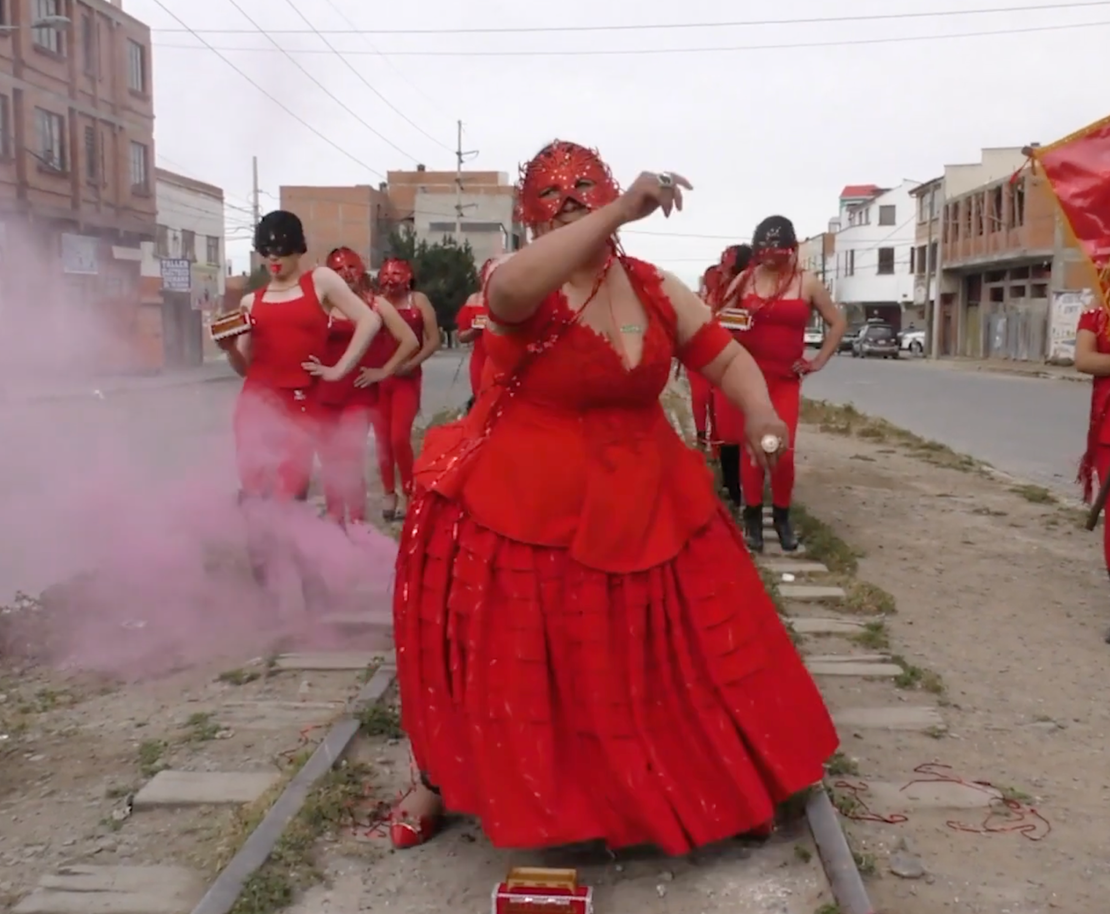
“Esculpir el Silencio” inscribes itself in the terrain of territory, reimagining it as both a physical and symbolic space traversed by displacement. Conceived by Uruguayan artist Tamara Cubas, this performative installation transforms testimonies of migrant women into a landscape of salt, sound, and voice. The desert-like environment evokes the precariousness and endurance of migration, while the voices—collected through Cubas’s “dispositivos de relación”—resonate as fragments of survival and hope. Collaborations with Gabriel Calderón (dramaturgy), Alicia Laguna (production and artistic mediation), and Francisco Lapetina (sound composition) further shape this living work. Premiered at the 2021 Festival Iberoamericano de Teatro de Cádiz, the piece is porous and processual, continuously integrating new narratives across geographies. “Esculpir el Silencio” not only embodies the crossing of borders but also reveals territory as a site of vulnerability, transformation, and collective memory.
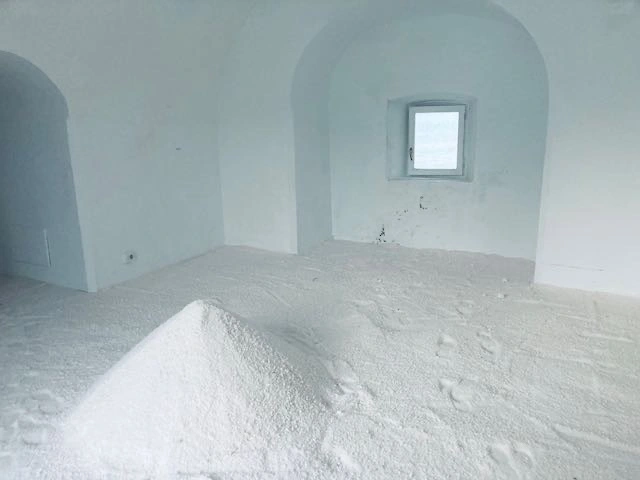
Tamara Cubas. What drives a woman alone, often with her back burdened by small children, to undergo a shipwreck foretold? What makes her believe that she will not sink, that her story will be different? What is she willing to lose, to change, to negotiate, to die for, in order to ensure she completes this journey? Esculpir el Silencio is a performative installation that gathers the testimonies of immigrant women, articulating a visual and sound space that evokes the journey as a means of survival and hope. Premiered in October 2021 at the Ibero-American Theater Festival (FIT) of Cádiz, it is one of the latest artistic proposals by Uruguayan choreographer and visual artist Tamara Cubas, created in collaboration with Gabriel Calderón (dramaturgy), Alicia Laguna from Teatro Línea de Sombra (Mexico) (production and artistic collaboration), and Francisco Lapetina (sound composition). The proposal is the result of the artist’s encounter with migrant women from different parts of the world, through what she calls “relational devices,” whose aim is to generate an honest and real connection with the women, allowing herself to be affected by the dialogue that emerges. The conversations that arose were later reworked by dramaturg Gabriel Calderón and transformed into audio by Francisco Lapetina. The installation evokes a salt desert that fills the entire exhibition space, which spectators may freely walk through. On the various mounds that emerge, one hears the voices of women recounting testimonies of the harsh conditions of the journey, the difficult decisions, and the inevitable consequences of pursuing a better destiny, imagined as a place of salvation. It is a living work, permeable to the different testimonies that Tamara Cubas collected in each territory she visited. Fluid, insofar as new stories continued to be added throughout this processual work.