Dispossesions in the Americas

Dispossesions in the Americas

  • Home
  • Explore
  • About
  • Authors
  • Art
  • Bodies
  • Curricula
  • Cultural Heritage
  • Maps
  • Territories
Back to Explore
Artwork

Tierra de nadie [No Man's Land]

  • Martiel, Carlos

Published: 2022

Media: Performance

  • Download Image

Abstract

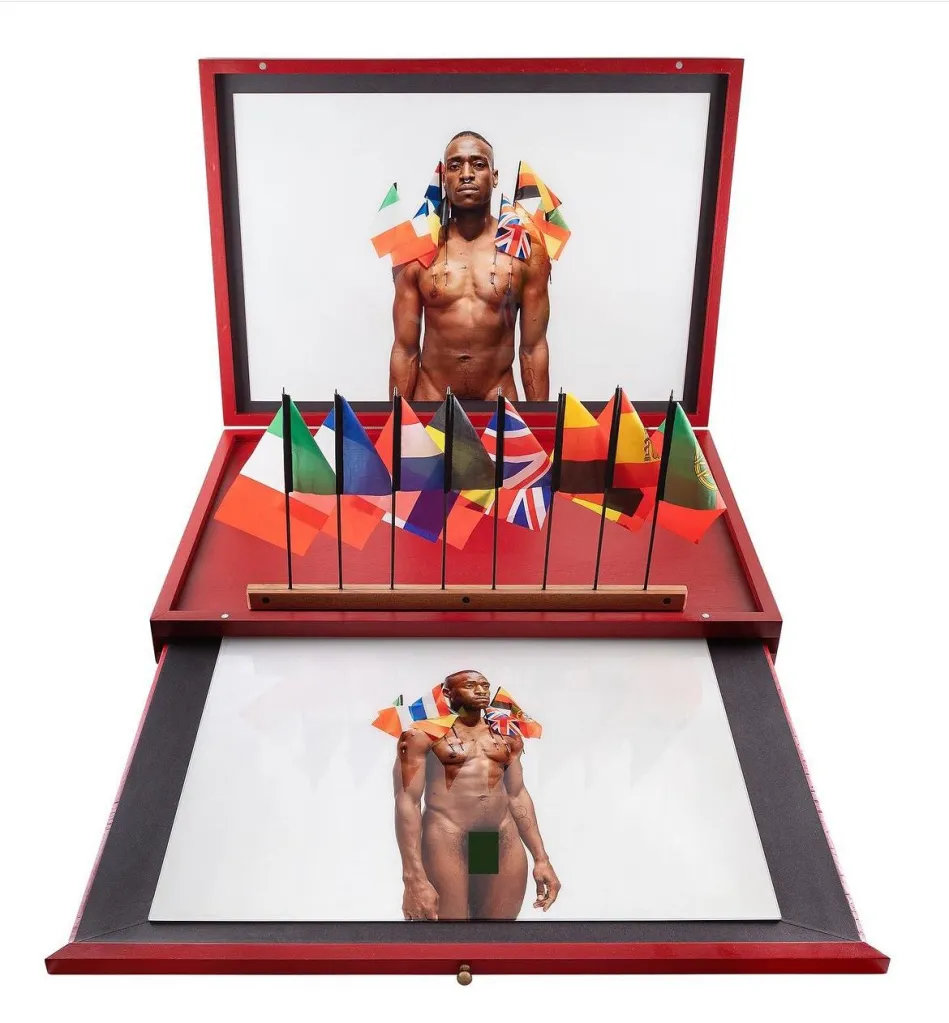
“Tierra de nadie” engages with cultural heritage, bodies, and territory by exposing the violent legacies of colonialism inscribed on the skin of the Global South. In this visceral performance by Cuban artist Carlos Martiel, the artist stands motionless with eight miniature flags pierced into the flesh of his torso—each representing a European nation involved in the colonization and territorial division of Africa between the 1880s and World War I. Martiel’s body becomes a living archive, bearing the marks of imperial conquest, forced displacement, and exploitation. Through this static, almost sculptural act, the artist offers a carnal narrative of historical trauma, where each puncture evokes the systematic plunder of lands and peoples. The performance transforms the body into a symbolic territory, wounded and occupied, echoing the enduring violence of colonial extraction and its ongoing effects on diasporic and marginalized communities.

“Tierra de nadie” is a work by Cuban artist Carlos Martiel, first presented at Galleria Continua in Paris, France, in 2022, curated by Laura Salas Redondo. Through a static, almost sculptural performance, the piece references conquest, colonization, territorial annexation, and the exploitation of human beings and natural resources in the “Global South.”

“I stand in the gallery with 8 hand-held flags pierced into the skin of my torso. The flags used represent the European countries that invaded, colonized, and territorially divided Africa between the 1880s and the beginning of World War I: the United Kingdom, Germany, Belgium, the Netherlands, Italy, France, Portugal, and Spain.”

By placing his own body at the center of the performative act, Carlos Martiel constructs an epidermal, carnal narrative that materializes the pain of African populations forced into diaspora, illustrating this violence as a penetration that tears the skin. These incisions, like traces, mark involuntary displacements, occupation, and the illegal plundering of their body-territories—acts carried out fiercely and systematically through slavery and subjugation imposed over centuries by rapacious colonial policies that remain in effect to this day.
  • Download Image

Reading in Spanish

Artwork

Tierra de nadie

  • Martiel, Carlos

Published: 2022

Media: Interpretación artística

  • Download Image
  • Download Image

Reading in Portuguese

Artwork

Tierra de nadie [Terra de ninguém]

  • Martiel, Carlos

Published: 2022

Media: Interpretação artística

  • Download Image

Resumo

“Tierra de nadie” aborda o patrimônio cultural, os corpos e o território ao expor os legados violentos do colonialismo inscritos na pele do Sul Global. Nessa interpretação artística visceral do cubano Carlos Martiel, o artista permanece imóvel com oito bandeiras em miniatura cravadas na carne do seu torso. Cada uma delas representa uma nação europeia envolvida na colonização e divisão territorial da África entre a década de 1880 e a Primeira Guerra Mundial. O corpo de Martiel se transforma em um arquivo portador das marcas do domínio imperial, do deslocamento forçado e da exploração. Mediante este ato estático, quase escultórico, o artista oferece uma narrativa carnal do trauma histórico, em que cada punção evoca o espólio sistemático de terras e povos. A interpretação artística transforma o corpo em um território simbólico, ferido e ocupado, que ecoa com a violência persistente da extração colonial e seus efeitos contínuos sobre as comunidades diaspóricas e marginalizadas.

“Tierra de nadie, é uma proposta do artista cubano Carlos Martiel, apresentada por primeira vez na Galeria Contínua de Paris, França, em 2022, patrocinada por Laura Salas Redondo. Mediante uma interpretação artística estática, quase escultórica, a proposta faz referência à conquista, à colonização, à anexação de territórios e à exploração humana e dos recursos naturais no “Sul Global”.

“Permaneço em pé na galeria com 8 bandeiras de mão cravadas na pele do meu torso. As bandeiras utilizadas são dos países europeus que invadiram, colonizaram e dividiram territorialmente a África entre a década de 1880 e o início da Primeira Guerra Mundial: Reino Unido, Alemanha, Bélgica, Países Baixos, Itália, França, Portugal e Espanha.”

Colocando no centro da ação cênica o seu próprio corpo, Carlos Martiel articula uma narrativa epidérmica e carnal, materializando o sentir das populações africanas obrigadas à diáspora, ilustrando essa violência como uma penetração que desgarra sua pele. Fendas que, como rastos, indicam os deslocamentos involuntários, a ocupação e o espólio ilegal de seus territórios-corpo, executados feroz e sistematicamente por meio da escravidão e a submissão aplicadas durante séculos por políticas coloniais destrutivas ainda vigentes.

  • Download Image

Related Content

inSURrecciones: Reflections on decolonial performativities

inSURrecciones: Reflections on decolonial performativities

Art Exhibit 2024

Dispossessions in the Americas

A project by

University of Pennsylvania

Copyright 2024

With support from

Mellon Foundation

Site design & development

Element 84

Site Pages

  • Home
  • Explore
  • About
  • Authors
  • Art
  • Bodies
  • Curricula
  • Cultural Heritage
  • Maps
  • Territories