Abstract
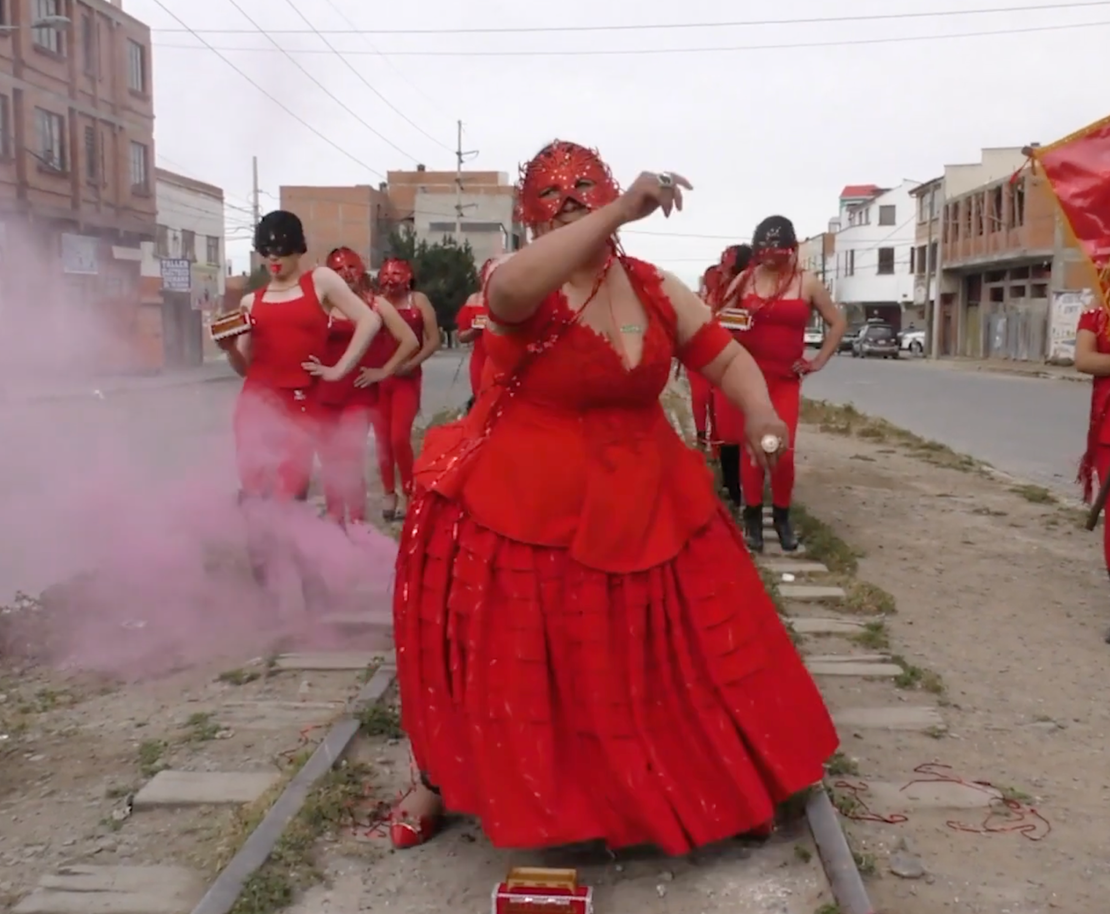
Hecatombe II is the second part of a performance trilogy (2021–2024) by Colombian artist Martha Hincapié Charry that explores the broken relationship between humans and nature. Drawing from her ancestral link to the Quimbaya, an Indigenous culture erased by colonization, the piece reimagines the body as a vessel of memory and ecological knowledge. It relates to cultural heritage by preserving and activating ancestral rituals, dances, and oral histories from Indigenous communities. These traditions, shared by leaders from the Wayúu (Colombia), Shinnecock (USA), and Muruy Muina (Amazon), are documented through a three-channel video installation and a live performance.The leaders share autobiographical accounts of resistance and offer ritual dances and ceremonies to protect land, spirit, and culture from extractive industries and neocolonial violence. In this space, the body becomes an archive of endangered wisdom and a site of spiritual defense. Hecatombe II seeks to decolonize performance by treating Indigenous science as healing technology and creating a space for reflection on planetary and cultural survival. It affirms that ancestral knowledge is not past. It is alive, embodied, and essential for imagining a future in balance with the Earth.
Hecatombe II is part of the Hecatombe trilogy, created between 2021 and 2024 by Colombian-born artist and choreographer Martha Hincapié Charry. Through this work, she reflects on the contemporary crisis in the relationship between humans and nature, attempting to embody and reimagine our role in the world. These concerns stem from her genealogical connection to one of Colombia’s most important ancestral cultures, the Quimbaya, exterminated during colonization.
In this second part of the trilogy, Hecatombe II aims to open a dialogue between cultures, worldviews, and ancestral wisdoms, exploring the possibilities of digitalization, immateriality, and the preservation of ancient knowledge. It documents endangered rituals, ceremonies, and dance-movements in a performance-documentary format.
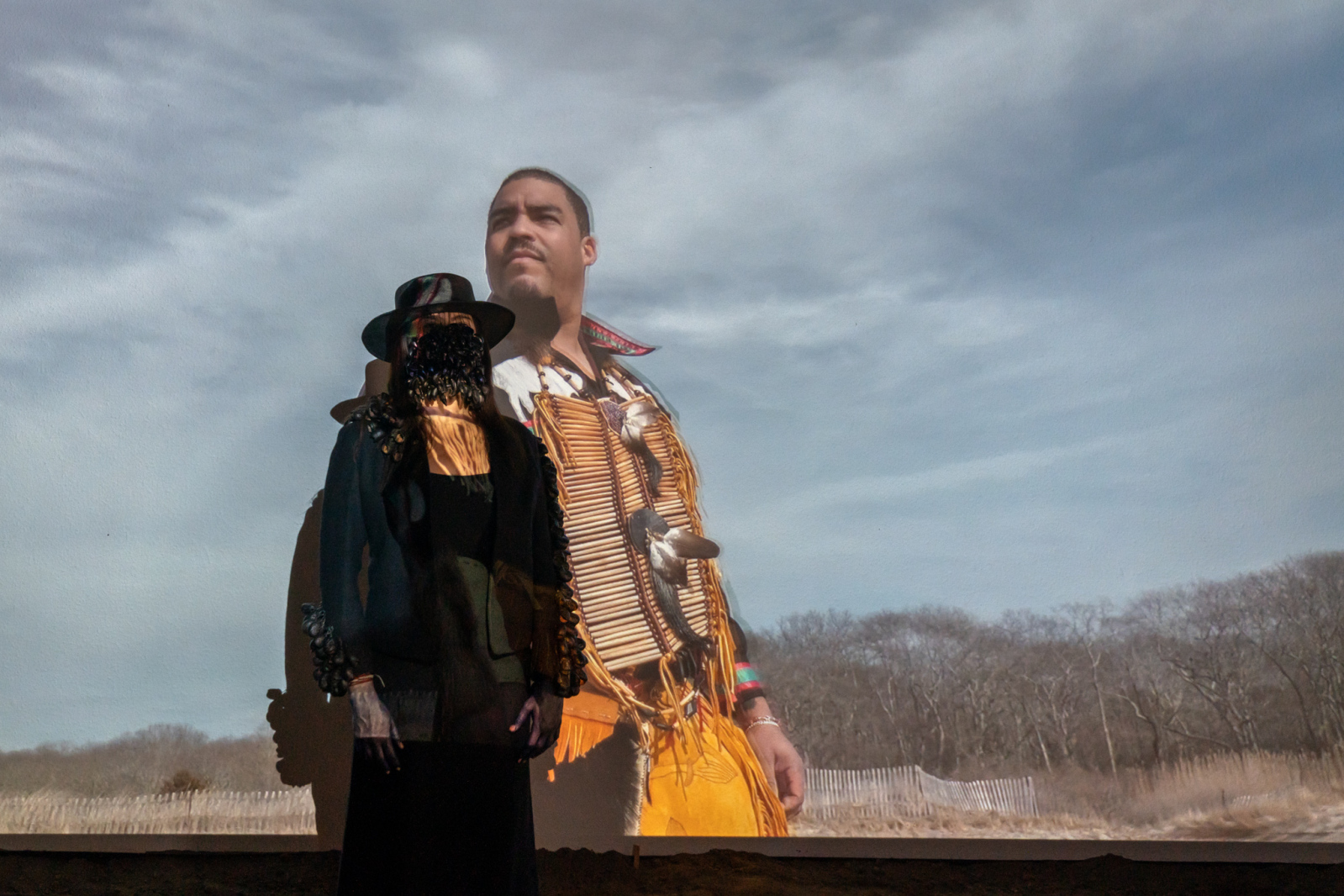
The piece unfolds through a three-channel video installation, accompanied by a live performance by Hincapié Charry, where audience-participants encounter Indigenous leaders. The work recognizes ancestral Indigenous knowledge as a science rooted in healing technologies aimed at planetary balance.
Invited participants include Petra Gouriyu and the Arralia community of the Wayúu people (La Guajira Desert), Shane Weeks of the Shinnecock Nation (Long Island, New York), and Aimema Úai of the Muruy Muina people (Amazon rainforest).
Through autobiographical narratives, these leaders share their origins, community life, survival struggles, and efforts to defend nature and its spirits from new forms of colonialism—such as multinational corporations, deforestation, destruction of sacred species, and extractive practices like mining on sacred lands. As part of their resistance, they offer tributes to the Earth to restore harmony between humans and the planet.
In the videos, the leaders perform ancestral dances and music tied to these offerings and engage in four distinct rituals and ceremonies connected to nature spirits.
The project seeks to decolonize performance practices by creating a space for reflection on the human-nature relationship and the consequences of daily actions—such as habitat destruction, species extinction, and the ongoing disappearance of Indigenous communities, as is still occurring in the eight countries that share the Amazon rainforest.
Citation
Hincapié Charry, Marta. 2021-2024. 'Hecatombe II'. Dispossessions in the Americas. https://staging.dia.upenn.edu/en/art/AMEX009/