Dispossesions in the Americas

Dispossesions in the Americas

  • Home
  • Explore
  • About
  • Authors
  • Art
  • Bodies
  • Curricula
  • Cultural Heritage
  • Maps
  • Territories
Back to Explore
Artwork

Veta Negra [Black Vein]

  • Cruz, Carlos

Media: Performance

  • Download Image

Abstract

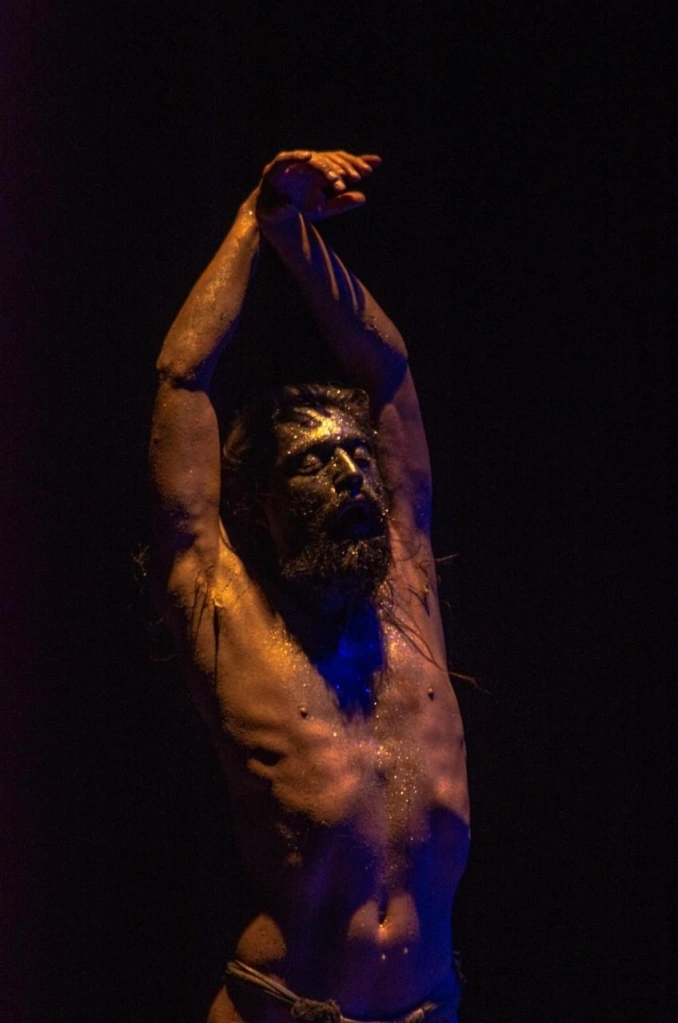
Veta Negra is a performance that embodies the erasure and resurgence of Afro-Mexican memory through the metaphor of the mined body. Framed as a paramnesia fantástica para una insurrección de sangre negra, the piece unearths the silenced history of Black presence in Pachuca and Real del Monte, regions marked by colonial silver extraction and toxic labor. At its core is the artist’s own fragmented inheritance: an Afrodescendant lineage buried under layers of whiteness, myth, and forgetting. Through a macabre, hallucinatory choreography rooted in Butoh, the performance reclaims the body as an immaterial archive: one that stores ancestral trauma, oral histories, gestures, and the geological residue of extractive capitalism. The body becomes both site and witness of dispossession: contaminated by the lingering toxins of the mine (el jale), yet pulsing with the reactivated memory of enslaved ancestors and Black fugitivity.

Veta Negra challenges the historical erasure of Blackness in Mexico by cracking open the colonial archive and exposing its racial silences. It is a dance of resistance and re-inscription—where the flesh carries what the record omits.

The performance is a macabre dance that cracks open history by addressing the erasure of Black blood and its traces in the colonial history of Pachuca and Real del Monte. Out of that erasure emerges a body with no past to tell—one that can only be accessed through reconstruction. Between delirious inspiration and mnemonic hallucinations of fiction, the piece gives form to a fantastic para-phrenia, embodied through the choreographed and codified reality of Butoh’s unconscious language.

My African root and my body as an intangible archive.

“I didn’t meet my father until I was 21, when I had the chance to ask him where my grandparents—and their parents—were from. The question arose because I didn’t look like him at all: his skin was that of a Black man, wide nose and curly hair. He responded with a story in which my paternal grandfather turned out to be a white man with blue eyes, and with memories passed down by his grandmother about the arrival of their ancestors—how the family’s matriarch had come as an African slave in 1555 to New Spain, and the patriarch had arrived with a Hungarian circus, met the matriarch, and thus began a veta negra that flows into me.”

“The body becomes an archive when, in a relationship of otherness, it appropriates, incorporates, and transmits the Other. However, the dialectic between body and archive is problematic, as it links two seemingly disparate entities. On one hand, the archive can take various forms and be understood through its materiality, in order to preserve memory and/or serve as research material. On the other hand, the archive can also be approached through its immateriality—that is, as a body of knowledge transmitted through oral tradition, bodily memory, habits, behaviors, and lived experience.”

Veta Negra is, then, a body-archive exposed to intoxicating elements—to the jale (mine waste) that is still breathed, still kicked—seeking to decode and reconstruct the genetic and geological memory of la pachocha, the wealth of the land, through its deep, carnal, and historical time.

Citation

Cruz, Carlos. 'Veta Negra [Black Vein]'. Dispossessions in the Americas. https://staging.dia.upenn.edu/en/art/AMEX007/
  • Download Image

Reading in Spanish

Artwork

Veta Negra

  • Cruz, Carlos

Media: Interpretación artística

  • Download Image
  • Download Image

Reading in Portuguese

Artwork

Veta Negra [Veia Negra]

  • Cruz, Carlos

Media: Interpretação artística

  • Download Image

Resumo

Veta Negra é uma interpretação artística que representa o apagamento e o ressurgimento da memória afro-mexicana por meio da metáfora do corpo minado. Concebida como uma paramnésia fantástica para uma insurreição de sangue Negro, a peça desenterra a história silenciada da presença negra em Pachuca e Real del Monte, regiões marcadas pela extração colonial de prata e pelo trabalho tóxico. Em seu núcleo se encontra a herança fragmentada do próprio artista: uma linhagem Afrodescendente sob capas de branquitude, mito e esquecimento. Mediante uma coreografia macabra e alucinatória inspirada no Butoh, a interpretação artística reivindica o corpo como arquivo imaterial: um corpo que guarda o trauma ancestral, as histórias orais, os gestos e o resíduo geológico do capitalismo extrativista. O corpo se transforma em local e testemunha do espólio: contaminado pelas toxinas persistentes da mina (jale), mas palpitante com a memória reativa dos ancestrais escravizados e a negritude chimarrona.

Veta Negra desafia o apagamento histórico da negritude no México ao esmiuçar o arquivo colonial e expor seus silêncios raciais. É uma dança de resistência e reinscrição, na que a carne guarda o que o registro omite.

“Para todos, o trabalho do negro. PARAMNESIA FANTÁSTICA PARA UMA INSURREIÇÃO DE SANGUE NEGRO. Corre escravo fugitivo, foge, entra na floresta, nos mares e desertos, escapa desse desejo incomensurável e demoníaco de poder …”

Veta Negra reflete sobre os estragos causados pelas estações mineiras de prata na região de Pachuca e seu vínculo com uma raiz Afro-mexicana oculta e invisibilizada à que ele mesmo pertence. A interpretação artística é uma dança macabra que esmiuça a história abordando o apagamento do sangue Negro e suas marcas na história colonial de Pachuca e Real del Monte. Desse apagamento surge um corpo sem passado que deve ser relatado, que só pode ser acessado através da reconstrução. Entre a inspiração delirante e as alucinações mnésicas da ficção, a parafrenia fantástica é representada na realidade coreografada e codificada da linguagem inconsciente do Butoh.

Minha raiz africana e meu corpo como arquivo intangível. «Só conheci meu pai quando tinha 21 anos, quando tive a oportunidade de lhe perguntar de onde eram meus avós e os avós dos meus avós. A dúvida surgiu porque eu não parecia em nada com ele, já que seu rosto era de um homem negro com nariz largo e cabelo de chinês. Respondeu-me com a história de que meu avô paterno resultou ser um homem branco de olhos azuis e com as lembranças que sua avó contava para ele sobre a chegada de seus antepassados, contando que a matriarca da família tinha chegado como escrava africana em 1555 a Nova Espanha e o patriarca tinha chegado com um circo húngaro, conhecido à matriarca e aí começa uma Veta Negra que acaba em mim.»

«O corpo se transforma em arquivo quando, em uma relação de alteridade, ele se apropria, incorpora e transmite o Outro, No entanto, a dialética entre corpo e arquivo é problemática, já que vincula duas entidades aparentemente discrepantes. De um lado, o arquivo pode assumir diferentes formas e ser entendido a partir de sua materialidade, a fim de conservar a memória e/ou de servir como material de pesquisa. Do outro, o arquivo também pode ser abordado a partir da sua imaterialidade, isto é, como um conjunto de saberes que podem estar imbuídos na transmissão oral, na memória corporal, nos hábitos, nos comportamentos e nas experiências vivenciadas»

Veta Negra é, portanto, um corpo-arquivo que foi exposto a elementos intoxicantes, ao «jale» que ainda respira, que ainda se «patea», para decodificar e reconstruir a memória genética e geológica de «la pachocha», a riqueza da terra, através de seu tempo profundo, carnal e histórico.

Citation

Cruz, Carlos. 'Veta Negra [Veia Negra]'. Dispossessions in the Americas. https://staging.dia.upenn.edu/pt/art/AMEX007/

  • Download Image

Related Content

inSURrecciones: Reflections on decolonial performativities

inSURrecciones: Reflections on decolonial performativities

Art Exhibit 2024

Dispossessions in the Americas

A project by

University of Pennsylvania

Copyright 2024

With support from

Mellon Foundation

Site design & development

Element 84

Site Pages

  • Home
  • Explore
  • About
  • Authors
  • Art
  • Bodies
  • Curricula
  • Cultural Heritage
  • Maps
  • Territories