Abstract
TZOMPANTLI is a performative sculpture that reimagines the pre-Hispanic tzompantli as a contemporary act of political reckoning. Through the violent transformation and impalement of clay heads representing fifteen historical and political figures from Abya Yala, the piece confronts colonial legacies and authoritarian regimes responsible for collective harm. The work engages with the body as both symbol and material—compressing, deforming, and displaying it as a residue of state violence. By staging the destruction of these figures in public, TZOMPANTLI makes visible the ongoing relationship between bodies and dispossession in Latin America: bodies shaped by conquest, erasure, and resistance. It proposes a counter-narrative where sculpture and performance merge to interrogate power, memory, and the historical use of bodily punishment as a mechanism of control.
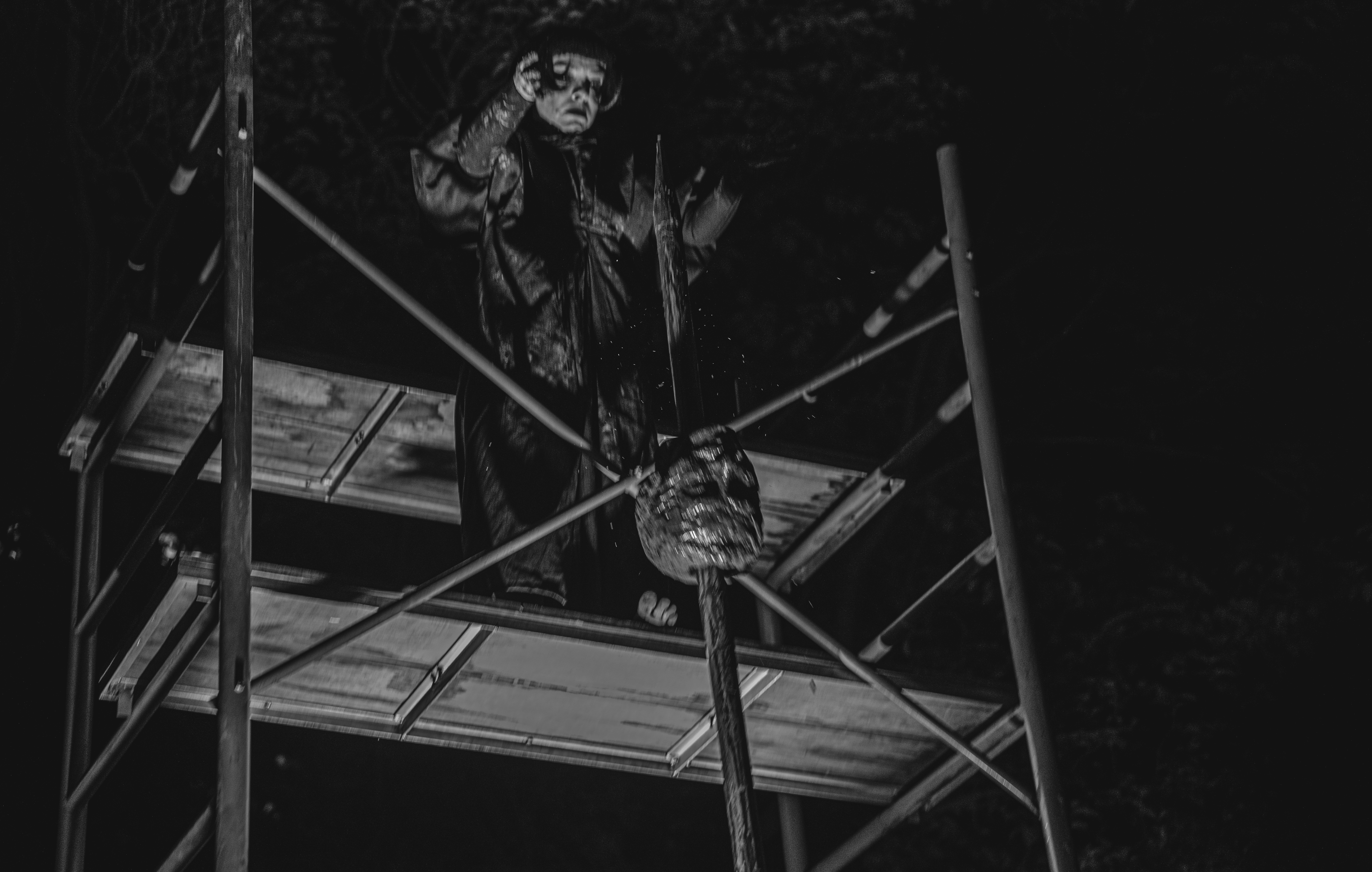
The performance engages with the figure of the pre-Hispanic Tzompantli in relation to other methods of torture, linking universal practices of punishment from the same historical period in the Americas. This historical investigation through action becomes a staging of “new ways of approaching methods of torture from the present.” TZOMPANTLI can be understood as a multifaceted device of punishment enacted through a performative act that generates an alternative narrative about the figures of power in Latin American history—personalities who, according to historical accounts, have been harmful to the people. The performative action unfolds around a sculptural structure measuring 4.5 meters in height: a stake made of metal and wood of equal height, using materials such as concrete, clay, and pigments. Fifteen heads representing political figures tied to the history of the Abya Yala continent are impaled. Each was disfigured, crushed, and compressed during the performance. Their remains, pierced onto the metal and wooden stake, are left as traces/remnants forming a sculptural installation. The figures were carefully selected based on the colonial history of the American continent: Queen Isabella the Catholic, Christopher Columbus, Hernán Cortés, Augusto Pinochet, Rafael Videla, Fidel Castro, Simón Bolívar, Hugo Chávez, Victoriano Huerta, Gustavo Díaz Ordaz, Luis Echeverría, Antonio López de Santa Anna, Rafael Trujillo, Anastasio Somoza, and José de San Martín. The piece took place in front of a live audience. The elements that transformed the clay included addition, subtraction, deformation, vertical modeling, gravity, speed, and chance. TZOMPANTLI is an original piece commissioned by the inSURrecciones gathering and was presented in the gardens of the Museum of Modern Art in Mexico City.
Citation
Castillo, Deborah. 'Tzompantli'. Dispossessions in the Americas. https://staging.dia.upenn.edu/en/art/AMEX004/