Abstract
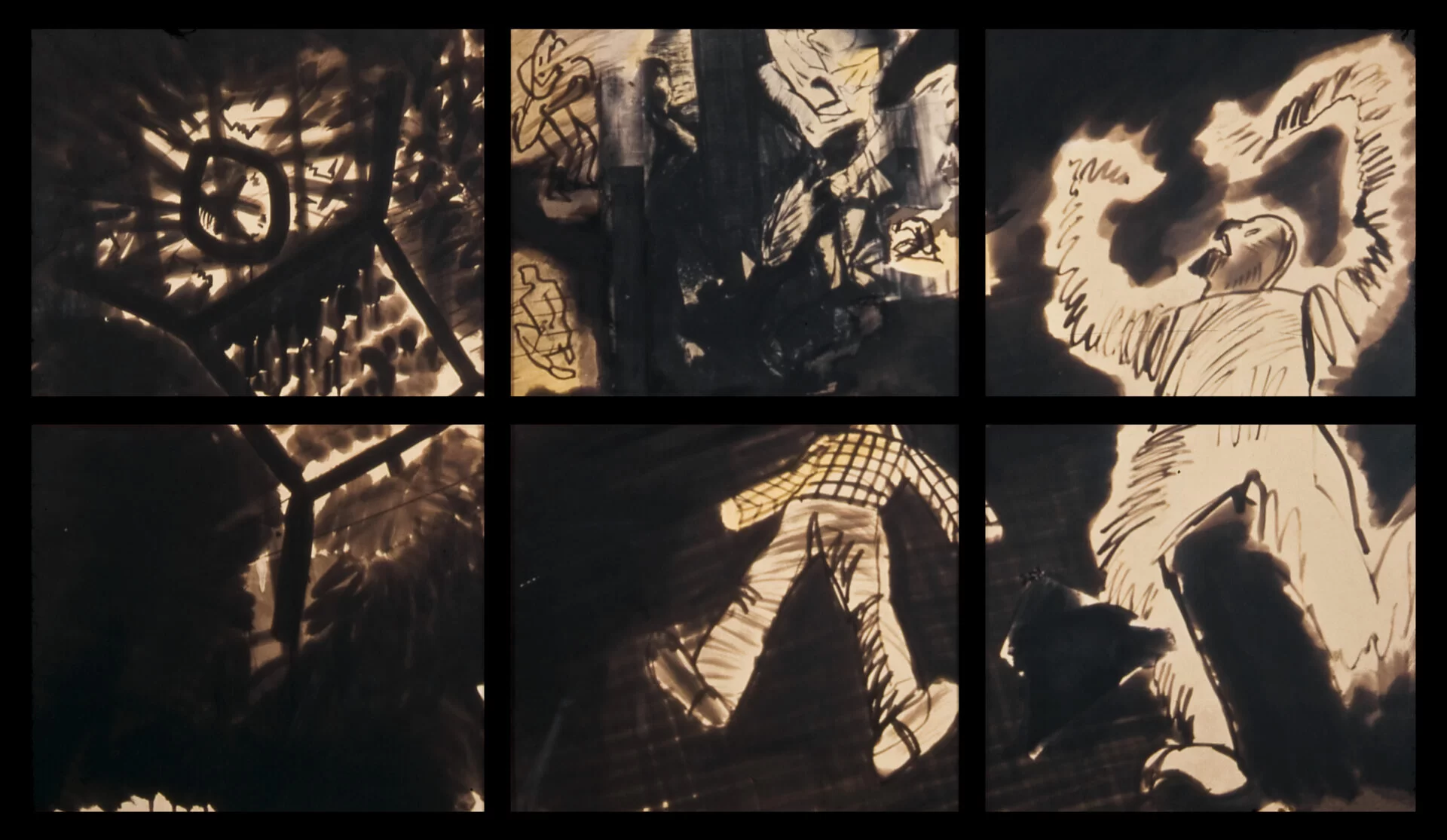
Virosis confronts the body as a site of vulnerability, trauma, and systemic neglect in the early years of the HIV/AIDS crisis. Through a sequence of six fragmented and shadowy photographic panels, Miguel Ángel Rojas captures bodies in states of collapse, erasure, and exposure. Rendered through partial silver gelatin development, the figures seem to dissolve or emerge under chemical stress. This a metaphor for the social and biological forces consuming queer bodies during the epidemic.
The work does not simply depict suffering; it materializes it. The photographic process itself becomes a language of decomposition, mirroring how the infected body was seen as contaminated, disposable, or invisible. By presenting the body in fragments, Virosis exposes the violence not only of disease but of abandonment, stigma, and state silence.
In this way, the body is not only represented; it is chemically embedded in the medium, physically altered, and politically charged. Virosis asks us to look, and to remember, what society tried to suppress.
Citation
Rojas, Miguel Ángel. 1986. 'Virosis'. Dispossessions in the Americas. https://staging.dia.upenn.edu/en/art/ACOL003/