Abstract
“EL VACÍO” [THE VOID] activates the body as a site of memory, mourning, and collective action. Conceived as a counter-monument to the HIV/AIDS crisis, the work marks the absence of bodies lost and stigmatized while offering a space for their reappearance through gathering, performance, and community dialogue.
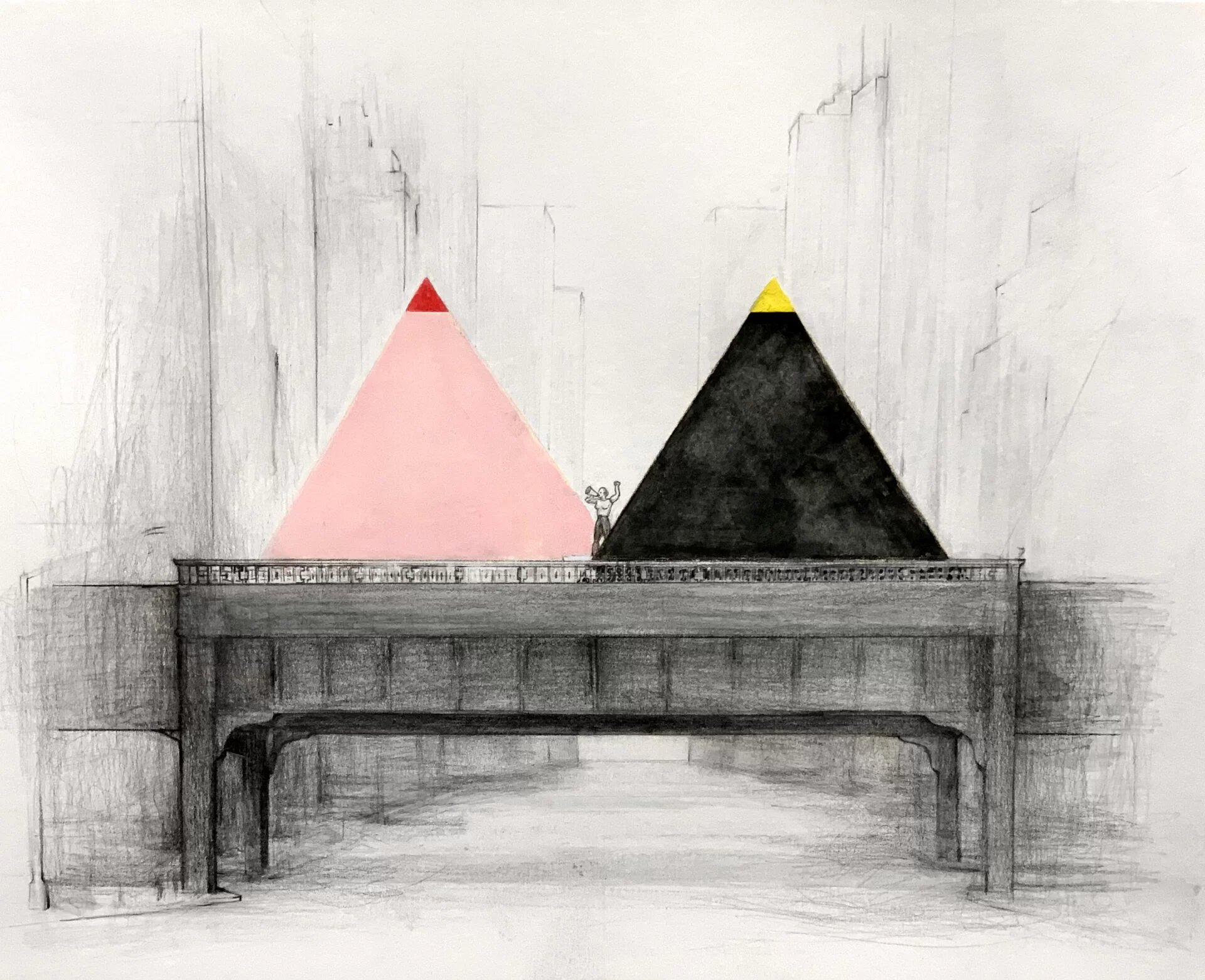
Its two pyramids—one pink with a red tip, the other black edged in yellow—compress layered references to queer, racialized, and non-binary bodies: the pink triangle once used for repression and later reclaimed by activists, the red AIDS ribbon, and yellow’s link to gender dissidence.
Rather than depicting bodies literally, EL VACÍO summons them through symbols and functions: the assembled body, the grieving body, the resisting body. In doing so, the work transforms public space into a stage for remembrance and protest, reminding us that although the virus can become undetectable, stigma still clings to the bodies that bear it.
EL VACÍO [THE VOID] is a public sculpture, a counter-monument, and a space for public assembly, queer performance, and community discussions about the ongoing HIV/AIDS crisis. Originally proposed in 2020 as a commission for the High Line Plinth by Carlos Motta, Koray Duman, and Theodore Kerr, the project was not selected and remains unrealized in its original form.
Today, thanks to AIDS activism and scientific advances, HIV can be rendered undetectable in most blood tests, resulting in better health outcomes for those living with the virus and making it non-transmittable through sexual contact. However, an effective treatment still remains absent for the stigma, discrimination, and criminalization that continue to affect those impacted by the disease.
The project consists of two triangles: one black, representing all the colors of the universe, and the other pink, a color symbolizing queer liberation. The pink triangle is tipped in red, referencing the iconic AIDS ribbon, and outlined in yellow, a color associated with nonbinary gender expressions.
In this version created specifically for Museo de Arte Moderno de Bogotá (MAMBO), EL VACÍO is envisioned as a memorial to the victims of the epidemic and as a space for gathering, dialogue, and reflection on the histories and futures of the community living with it. Throughout the exhibition, the space will host performative interventions by artists and activists participating in Virosis and Hilos de Sangre [Threads of Blood], an exhibition and research project located on the museum’s third floor, as well as by the museum’s education department.
Citation
Duman, Koray, Ted Kerr, and Carlos Motta. 2020. 'El Vacío [The Void]'. Dispossessions in the Americas. https://staging.dia.upenn.edu/en/art/ACOL001/