Abstract
Pancetti’s work initiates a reevaluation of female identity, presenting a nuanced perspective that disrupts established conventions. The artwork navigates the intersection of the body and territory, offering a glimpse into the lived experiences and cultural narratives within Brazil.
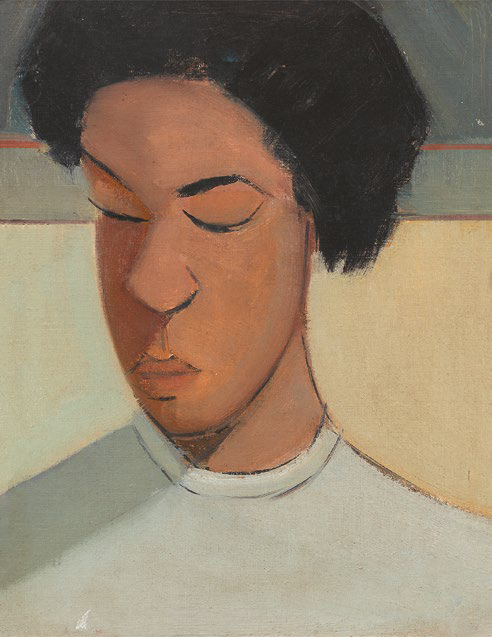
José Pancetti’s “Portrait of Lourdes” captures the everyday lives of Afro and Mulatto women in Brazil. This portrait challenges conventional notions of portraiture, deviating from showcasing wealth and power. Instead, it presents a reflective moment with Lourdes closing her eyes, offering an alternative depiction of the modern woman in contrast to earlier representations from the late 19th and early 20th centuries. Nery’s work prompts a reconsideration of female identity, introducing a nuanced perspective that challenges established norms.
Citation
Pancetti, José. 1958. 'Retrato de Lourdes [Portrait of Lourdes]'. Dispossessions in the Americas. https://staging.dia.upenn.edu/en/art/ABRA023/