Abstract
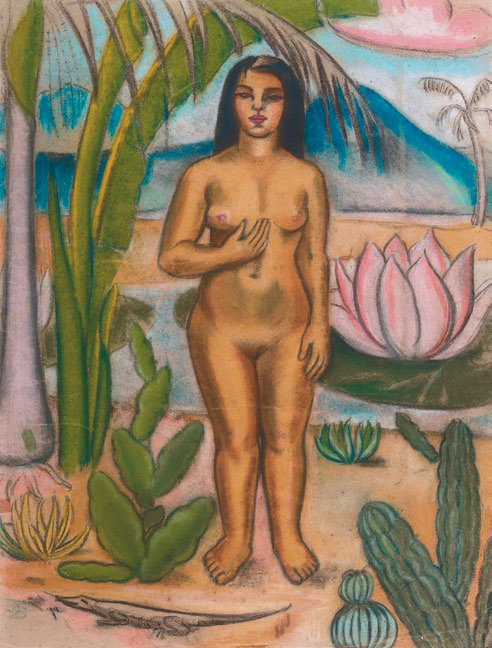
The artwork features a gracefully posed nude woman with brown skin against a vibrant backdrop of palm trees, cacti, a lotus flower, and distant mountains. Malfatti’s skillful use of pastels accentuates the warmth of the subject’s skin, establishing a visual conversation between the female form and the diverse elements of nature. The painting prompts viewers to reflect on the interconnectedness of the female body with the rich and varied beauty of the surrounding natural world, embodying both body and territory in a harmonious union.
“Índia” (1917) by Anita Malfatti is a captivating pastel portrait that explores the harmonious relationship between the female form and the natural environment. The artwork depicts a nude woman with brown skin, elegantly posing amidst a lush, diverse landscape. Surrounding her are vibrant palm trees, cacti, a lotus flower floating on water, and distant mountains in the backdrop. Malfatti’s meticulous use of pastels brings out the warmth of the subject’s skin, while the carefully crafted natural elements create a visual dialogue between the human figure and the surroundings. “Índia” invites contemplation on the interconnectedness of the female body with the diverse beauty of the natural world.
Citation
Malfatti, Anita. 1917. 'Índia [India]'. Dispossessions in the Americas. https://staging.dia.upenn.edu/en/art/ABRA005/