Abstract
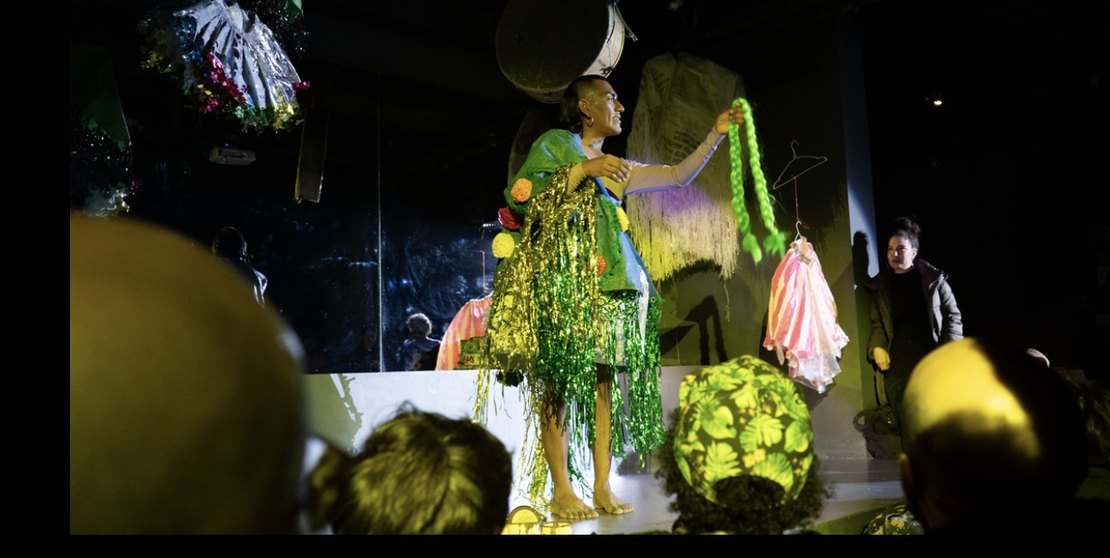
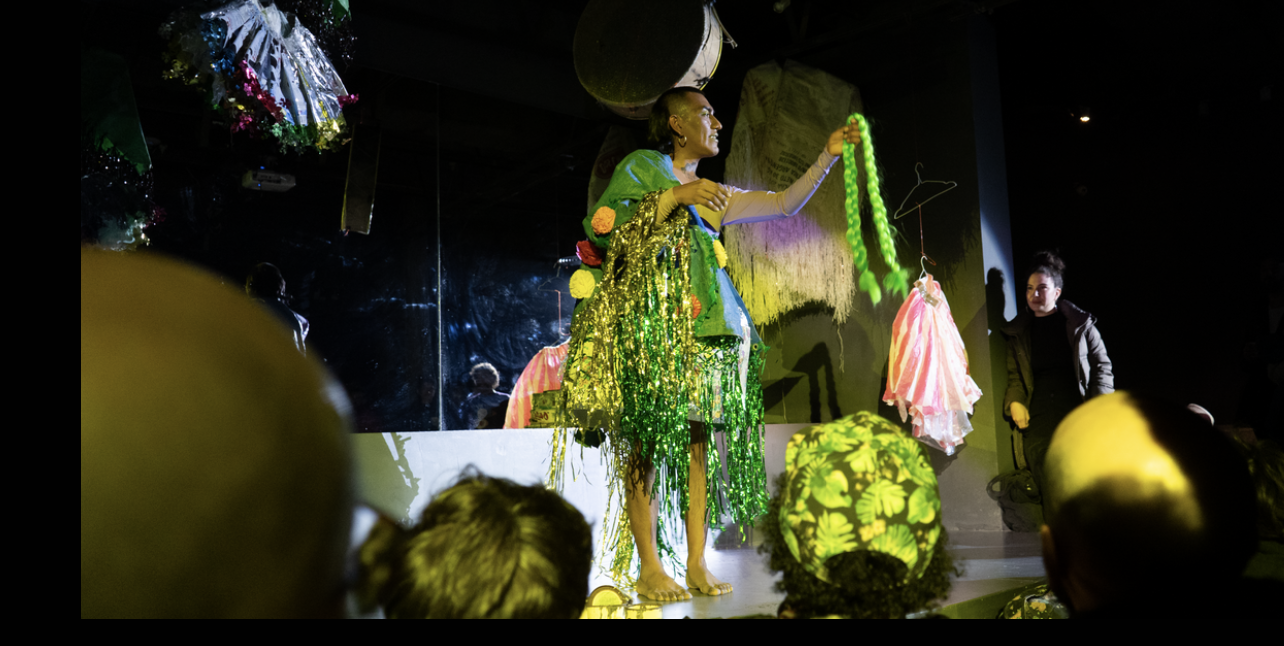
At the crossroads of cultural heritage and territory, “A Cosha from the Future” envisions an Indigenous figure who staggers through the “city of the Furious,” arriving from the year 2084 (or 5592 in the Andean calendar). Laden with ancestral memory, destroyed worlds, and the scars of displacement, the Cosha embodies the persistence of Indigenous heritage within fractured territories. Asking whether Argentines of the present fear the survival of Indians in the future, the performance turns the body into a vessel of continuity and return. Through song and dance, the Cosha voices vestiges of futures glimpsed yet repressed, detonating the present to recover the past. Evoking the phrase, “From the earth we are and to the earth we shall return,” the work insists on the inevitability of resurgence, staging a temporal crossing that unsettles dominant imaginaries and reclaims Indigenous presence across time and space.
A Cosha from the future staggers through the city of the Furious. It comes from the year 2084, or 5592 in the Andean calendar. It carries the weight of destroyed worlds, half-packed suitcases from permanent evictions, and a bouquet of withered flowers from poorly paid celebrations. Has the world forgotten them? Do Argentines of the present fear that there will be Indians in the FuTure? “From the eARth we are and to the eARth We shall RetuRn.” There is an Indian Cosha, dirty-faced, singing vestiges of futures we all glimpse, dancing the cornered steps of repression. There are Coshas in the future, detonating presents in order to reclaim the past. The return is inevitable.
Citation
Masi Mamani. 'Jujeñazo Vol. 2084 con la "Vendedora de cultura" [Jujeñazo Vol. 2084 featuring the ‘Culture Seller’]'. Dispossessions in the Americas. https://staging.dia.upenn.edu/en/art/AARG021/